
Table of Contents
- Aluminum vs Wood Fence: At-a-Glance Cost Comparison
- Upfront Investment: Materials and Initial Installation Costs
- Wood Fence Maintenance Requirements and Long-Term Costs
- Lifespan of Aluminum vs Wood Fencing
- Total Cost of Ownership: Aluminum vs Wood Fence Over 20 Years
- Aesthetic Appeal, Privacy, and Property Value
- Pros and Cons: Aluminum Fence vs Wood Fence
- Which Fence Material Should You Choose?
- Frequently Asked Questions
Last Updated: September 1, 2026
Aluminum vs Wood Fence: At-a-Glance Cost Comparison
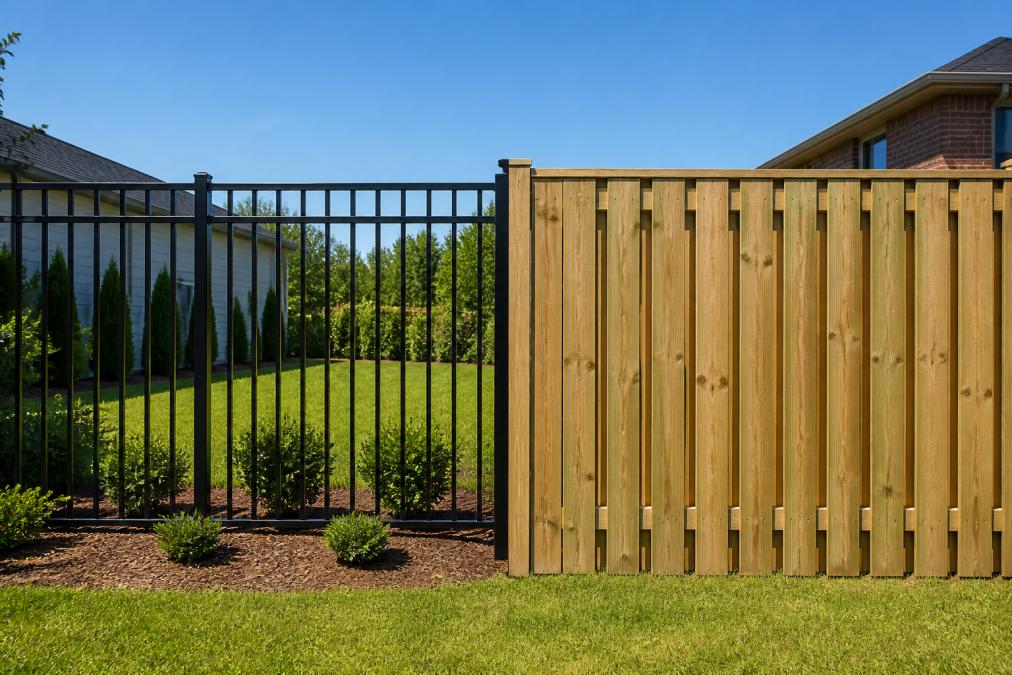
The aluminum vs wood fence cost comparison is one of the most common decisions homeowners face, and the answer is rarely as simple as which material costs less per linear foot. Wood fences typically cost less to purchase initially, but aluminum fences cost significantly less to own over time. The gap widens considerably depending on your climate, maintenance tolerance, and how long you plan to stay in your home.
| Factor | Aluminum Fence | Wood Fence |
|---|---|---|
| Material Cost (per linear foot) | Moderate to high | Low to moderate |
| Installation Labor | Moderate | Moderate to high |
| Annual Maintenance | Minimal | Significant |
| Lifespan | 30-50+ years | 10-20 years |
| Rot/Rust Risk | None | High without treatment |
| Privacy Options | Limited (picket style) | Full panels available |
| DIY Friendly | Yes (pre-assembled panels) | Yes, but more labor-intensive |
| Long-Term Value | High | Moderate |
Aluminum wins on total cost of ownership. Wood wins on upfront material cost and full privacy. Your climate and maintenance tolerance should drive the final decision.
Upfront Investment: Materials and Initial Installation Costs
Wood fencing holds its clearest advantage in upfront cost, though the margin narrows once labor is included.
Aluminum Fence Installation Cost Per Linear Foot
Aluminum fence installation typically runs between $15 and $40 per linear foot for materials, with total installed costs ranging from $25 to $60 per linear foot when professional labor is included, according to the HomeAdvisor cost guide for aluminum fencing. Powder-coated finishes, which protect against corrosion and UV degradation, are standard on quality aluminum products and require essentially zero maintenance after installation.
Wood Fence Material and Labor Expenses
Pressure-treated lumber costs less per linear foot than aluminum at purchase. However, labor expenses often match or exceed aluminum installation costs. According to the National Association of Home Builders cost data, fencing labor accounts for 50-60% of total project cost regardless of material. Wood installation is more complex, requiring deeper post setting, precise board spacing, and longer installation time.
DIY vs. Professional Installation Labor Breakdown
DIY aluminum installation is straightforward with pre-assembled panels. Posts go in, panels click or bolt into place, and a homeowner with basic tools can complete 100-150 linear feet over a weekend.
DIY wood installation requires more skill: cutting boards to length, spacing pickets consistently, managing post alignment, and handling heavy privacy panels. The margin for costly mistakes is higher.
| Installation Type | Aluminum (DIY) | Aluminum (Pro) | Wood (DIY) | Wood (Pro) |
|---|---|---|---|---|
| Labor Cost | $0 | Moderate | $0 | Moderate to high |
| Time (150 linear ft) | 1-2 weekends | 1-2 days | 2-3 weekends | 2-3 days |
| Skill Level Required | Basic | N/A | Intermediate | N/A |
| Error Risk | Low | Low | Moderate | Low |
Pre-assembled aluminum panels eliminate the need for on-site cutting or measuring, making aluminum the more forgiving choice for first-time fence installers.
Wood Fence Maintenance Requirements and Long-Term Costs
Wood fence maintenance requirements are the most underestimated cost in any aluminum vs wood comparison. Pressure-treated lumber needs staining or sealing every 2-3 years to maintain structural integrity. Skip one cycle and you accelerate rot and decay, particularly at post bases.
A realistic wood fence maintenance cycle includes staining and sealing applications every 2-3 years, board replacement beginning around year 5-7, and post inspection and replacement around year 10-12. Over a 20-year period, cumulative maintenance costs routinely exceed the original installation cost. The Forest Products Laboratory wood durability research confirms that untreated or undertreated wood in ground contact shows significant structural degradation within 5-7 years in most climate zones.
Aluminum requires no meaningful maintenance. The powder-coated finish resists rust, corrosion, UV fading, and impact. Annual maintenance amounts to occasional cleaning with a garden hose.
Lifespan of Aluminum vs Wood Fencing
Aluminum fence lifespan: 30-50+ years with no degradation in structural integrity. Manufacturers back this with lifetime warranties.
Wood fence lifespan: 10-20 years under typical conditions, assuming consistent maintenance. Pressure-treated lumber in humid climates may need replacement in 8-10 years. Cedar in dry climates with regular sealing can reach 20 years.
Over a 40-year period, a homeowner with a wood fence may replace it twice. An aluminum fence owner replaces nothing.
Total Cost of Ownership: Aluminum vs Wood Fence Over 20 Years
Total cost of ownership is the only honest way to compare aluminum vs wood fence costs. Upfront material price is misleading.
| Cost Category | Aluminum Fence | Wood Fence |
|---|---|---|
| Initial Materials | Higher | Lower |
| Installation Labor | Moderate | Moderate to high |
| Annual Maintenance | Near zero | Significant per cycle |
| Board/Component Replacement | Minimal | Moderate (years 5-15) |
| Full Replacement Risk | Very low | High (year 15-20) |
| 20-Year Total (relative) | Lower | Higher |
The crossover point, where aluminum’s total cost drops below wood’s, typically occurs between years 5 and 8.
How Regional Climate Affects Your ROI
Wood fence performance degrades faster in humid, wet, or coastal climates where moisture drives rot and decay. In the Southeast, Gulf Coast, and Pacific Northwest, wood fences face accelerated deterioration, pushing lifespan toward the lower end and increasing maintenance frequency. In dry climates, wood holds up better, though the ROI gap between aluminum and wood narrows rather than disappears.
Aluminum is climate-agnostic. Powder-coated aluminum resists coastal salt air, humidity, freeze-thaw cycles, and UV exposure without degradation.
HOA Rules and Zoning Regulations That Add to Your Budget
Many HOAs specify approved fence styles, heights, and colors. Aluminum fencing, particularly picket styles, is frequently pre-approved for front yards. Full-privacy wood panels are often restricted to rear yards or prohibited entirely. Permit costs vary by jurisdiction and can range from nominal to several hundred dollars. Pool-code compliance adds another layer: aluminum’s consistent panel dimensions make compliance verification straightforward.
Check your HOA rules and local zoning before selecting a material.
Aesthetic Appeal, Privacy, and Property Value
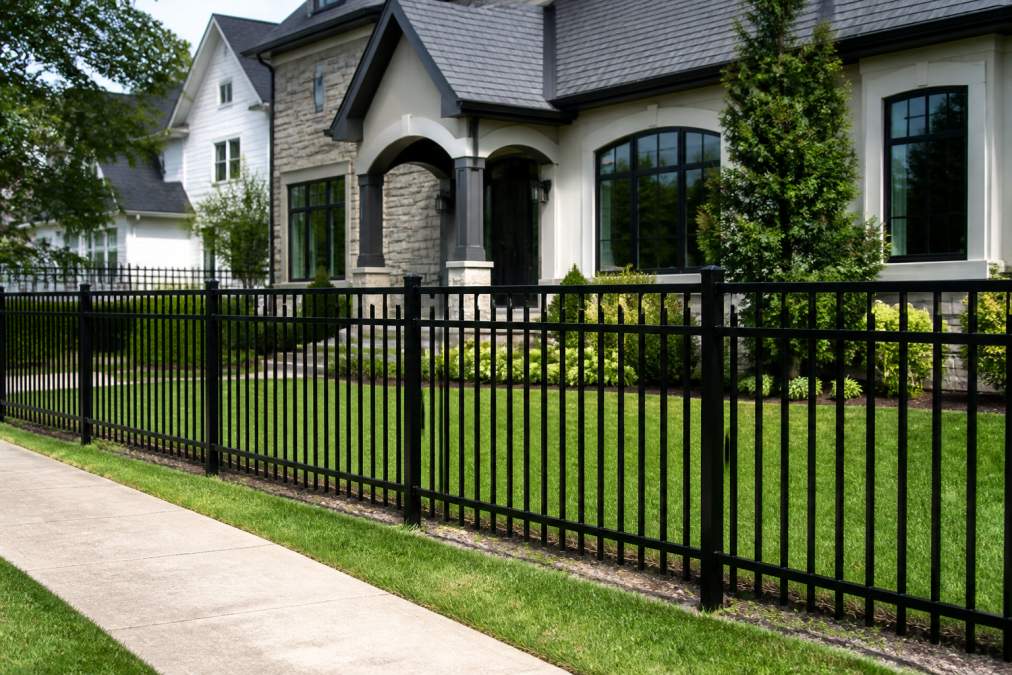
Aluminum fencing excels at curb appeal with clean lines, consistent finish, and the classic wrought iron look without maintenance. Black powder-coated aluminum signals property care to buyers and appraisers.
Wood fencing wins on privacy. A 6-foot solid wood privacy fence creates a genuine visual barrier that aluminum picket styles cannot match. For rear yards and privacy needs, solid wood is the functional standard.
A well-maintained fence of either type adds perceived value at sale. The distinction is condition: aluminum arrives in essentially the same condition it was installed in, while a 10-year-old wood fence may require buyer concessions or replacement.
A deteriorating wood fence at sale can reduce property value and trigger buyer requests for price reductions. Aluminum’s consistent appearance over time avoids this risk.
Pros and Cons: Aluminum Fence vs Wood Fence
Aluminum Fence Pros and Cons
Pros:
- Maintenance-free: no staining, sealing, or painting required
- Corrosion resistance built into powder-coated finish
- 30-50+ year lifespan with structural integrity intact
- Pre-assembled panels simplify DIY installation
- Consistent appearance over decades
- Pool-code compliant options available
- Lifetime warranty available from quality suppliers
Cons:
- Higher upfront material cost than basic wood
- Limited privacy: picket styles leave visible gaps
- Dents are permanent
- Fewer color options than paint-ready wood
Wood Fence Pros and Cons
Pros:
- Lower initial material cost
- Full privacy panel options widely available
- Familiar DIY installation process
- Paintable and stainable to any color
- Natural aesthetic
Cons:
- Rot and decay without consistent maintenance
- Lifespan of 10-20 years
- Ongoing maintenance costs accumulate significantly
- Faster degradation in humid or wet climates
- Post bases fail first, often requiring replacement before the fence itself
Which Fence Material Should You Choose?
Choose aluminum if you want a maintenance-free solution with long material lifespan, plan to stay in your home for more than 5-7 years, live in a humid or coastal climate, need pool-code compliant fencing, or want to maximize property value at sale.
Choose wood if your primary goal is full rear-yard privacy, your budget is tightly constrained upfront, you’re in a dry climate with low moisture exposure, or you need a fence for short-term property hold where long-term ROI is less relevant.
For most homeowners replacing aging fencing or installing new enclosures for pools or pets, aluminum is the stronger long-term investment. The total cost of ownership math, maintenance-free operation, and structural integrity over decades make it the practical choice for anyone thinking beyond the first year of ownership.
According to the Consumer Reports fencing buying guide, low-maintenance fencing materials consistently rank higher in homeowner satisfaction over 10+ year ownership periods.
Choosing between aluminum and wood fencing is ultimately a question of how you value your time, budget, and property’s long-term condition. Aluminum Fences Direct offers 100% American-made aluminum fencing with a lifetime warranty, pre-assembled panels for straightforward DIY installation, and wholesale pricing that makes the upfront cost gap smaller than most homeowners expect. If you’re ready to skip the maintenance cycle and invest in fencing that holds its value for decades, get a quote from Aluminum Fences Direct and see what your project costs with direct-to-site shipping included.
Frequently Asked Questions
Is an aluminum fence cheaper than wood over a 10-year period?
Aluminum fences typically cost more upfront per linear foot than basic pressure-treated wood, but wood’s maintenance cycle changes that math quickly. Wood requires staining and sealing every 2-3 years, plus periodic repairs for rot and decay. Over a 10-year period, those recurring costs often exceed aluminum’s initial price premium. Aluminum’s powder-coated finish needs no staining, sealing, or painting, making its total cost of ownership significantly lower across a decade of ownership.
What are the long-term maintenance costs of wood versus aluminum?
Wood fence maintenance requirements include staining or sealing every 2-3 years, occasional board replacement due to rot and decay, and repainting or re-staining when the finish fades. These costs add up to hundreds of dollars per maintenance cycle depending on fence height and linear footage. Aluminum fencing with a powder-coated finish requires no staining, sealing, or structural repairs under normal conditions, making annual maintenance costs close to zero for most homeowners.
Do aluminum fences increase property value more than wood?
Both materials can improve curb appeal and perceived security, which supports property value. Aluminum fences offer a consistent, well-maintained appearance over decades without weathering or discoloration, which appraisers and buyers tend to view favorably. Wood fences that show rot, warping, or faded stain can actually reduce perceived value. Because aluminum’s structural integrity holds up long-term with no visible degradation, it generally sustains its contribution to property value better than wood over time.
How does the installation process differ between aluminum and wood?
Wood fence installation involves cutting lumber to size, setting posts in concrete, attaching rails, and nailing or screwing individual boards, which requires more tools and carpentry skill. Aluminum fence installation typically uses pre-assembled panels that slide into pre-routed posts, reducing the steps and skill level required. Many DIY homeowners complete aluminum fence projects without prior fencing experience. Wood installation on sloped ground also requires more complex racking or stepping techniques compared to aluminum panels, which often adjust to follow natural yard slopes.
What are the primary downsides of choosing aluminum over wood?
Aluminum fences generally carry a higher upfront material cost per linear foot compared to basic pressure-treated lumber. Aluminum picket-style panels also provide limited privacy since they are not solid, making them less suitable for homeowners who want full visual screening. Wood offers more privacy panel options at lower initial costs. For tight budgets focused purely on upfront investment rather than total cost of ownership, wood can appear more accessible, though the maintenance costs close that gap over time.
This article was written using GrandRanker