
Table of Contents
- Top Alumisource Alternatives for Aluminum Fencing
- Aluminum Fence Cost Per Foot: What to Expect in 2026
- DIY Aluminum Fence Installation Guide: Step-by-Step for Homeowners
- Aluminum vs. Steel Fence Durability: Which Lasts Longer?
- Maintenance and Long-Term Care for Powder-Coated Aluminum Fences
- Environmental Impact and Code Compliance: What Competitors Miss
- Conclusion
- Frequently Asked Questions
Last Updated: September 17, 2026
Top Alumisource Alternatives for Aluminum Fencing
The aluminum metal fencing market reached $4.93 billion in 2026, and buyers searching for an Alumisource alternative for aluminum fencing now have more direct-from-manufacturer options than ever. This guide from Aluminum Fences Direct compares several suppliers on price structure, panel construction, and DIY fit.
| Supplier | Pricing Model | Best For | Domestic Manufacturing |
|---|---|---|---|
| Aluminum Fences Direct | Wholesale, per linear foot | DIY homeowners and contractors | Yes, 100% American-made |
| Ultra Aluminum Manufacturing | Quote-based | Wrought iron look, rust resistance | Yes |
| A to Z Quality Fencing | Quote-based | Custom fabrication projects | Yes, Wisconsin-made |
| Iron Fence Shop | Per panel | Buyers wanting installation guides | Varies by product |
Aluminum Fences Direct: Wholesale, American-Made, DIY-Friendly
Aluminum Fences Direct is a wholesale distributor of 100% American-made aluminum fencing built for DIY homeowners and contractors, offering pre-assembled panels and a lifetime warranty. Because panels ship directly from the manufacturer, buyers skip retail markups that typically inflate fence pricing. Customer David H. noted the aluminum quality was “definitely a better aluminum quality than similar models purchased from box stores.”
Ultra Aluminum Manufacturing: Ornamental Wrought Iron Look
Homeowners who want the classic ornamental look without wrought iron’s maintenance burden often land on Ultra Aluminum Manufacturing. Their panels mimic traditional wrought iron aesthetics while using rust-resistant aluminum, which matters because wrought iron requires regular painting to prevent rust, per Precision Fence Works’ material comparison.
A to Z Quality Fencing: Custom Fabrication and Domestic Sourcing
Projects with unusual dimensions or non-standard styles are where A to Z Quality Fencing fits. The supplier manufactures in Hartland, Wisconsin, and offers custom fabrication across five style options. Domestic manufacturing keeps quality control tight, though custom orders can extend lead times compared to stock panel kits.
Iron Fence Shop: Educational Resources and Recyclable Panels
Buyers who want guidance alongside materials tend to appreciate Iron Fence Shop’s installation guides and recyclable panel options. Panel pricing starts around $116 per panel, though cost varies significantly by grade and design. It is a solid fit for first-time installers who want reference material on hand.
Aluminum Fence Cost Per Foot: What to Expect in 2026
Aluminum fence cost per foot typically ranges from $25 to $45 per linear foot installed, while material alone runs $15 to $25 per linear foot, according to Aluminum-Fence.com’s 2026 cost study. The gap between those two figures is labor, and it is the single biggest lever in your budget.
Here is how the numbers break down:
- Material only: Pricing depends on fence height, style, and quantity.
- Professional installation: This adds a significant cost component.
- DIY savings: Installing yourself can lead to substantial savings on labor.
DIY Aluminum Fence Installation Guide: Step-by-Step for Homeowners
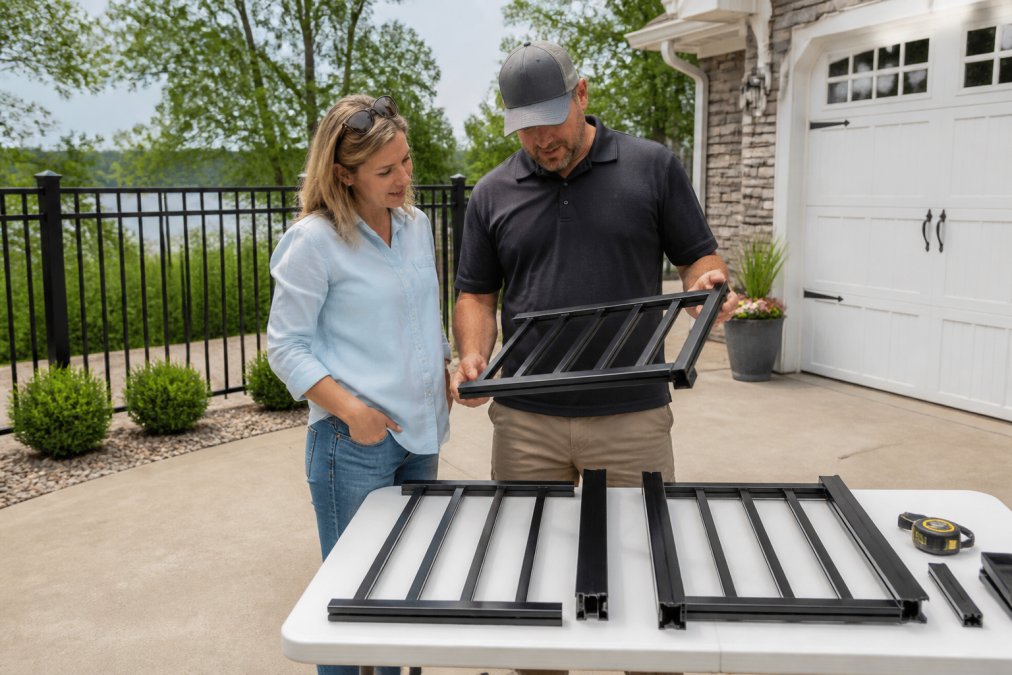
DIY aluminum fence installation follows a predictable sequence: lay out the fence line, set posts, attach pre-assembled panels, and mount gate hardware. Pre-assembled sections cut the hardest part of the job, keeping pickets aligned across a full run, because the panel arrives square and welded rather than as loose pickets you have to space by hand.
Tools and Equipment You Will Actually Need
A basic homeowner kit covers most jobs:
- Tape measure, marking paint, and a string line
- Post-hole digger or auger (for concrete footings) or a driver (for no-dig stakes)
- Cordless drill with a nut driver for panel brackets
- 4-foot level and a line level
- Wheelbarrow and mixing hoe if you are pouring concrete
- Hacksaw or angle grinder with a metal cutoff wheel for trimming rails
- Safety glasses and gloves
If your yard slopes, add a transit or a long straightedge, you will need it to rack panels.
Setting Posts: Footing Depth and Spacing
For concrete footings, a common residential pattern is a hole roughly 8 to 10 inches in diameter and 24 to 36 inches deep, set below your local frost line. Check with your building department for the frost depth in your area; posts set above frost depth can heave seasonally.
Racking Panels on Slopes
Aluminum panels are typically designed to rack, the pickets stay vertical while the top and bottom rails follow the grade. To rack a panel, set the two posts at the correct height difference, then slide the panel brackets into position and tighten. The maximum rack per panel is limited by the manufacturer; exceeding it stresses welds.
Hanging Gates and Hardware
Gate posts carry more load than line posts, so they typically need deeper footings and sometimes a larger post size. Set the gate post first, hang the gate, and check swing before you tighten the final brackets. Self-closing hinges and a latch that meets pool-code height requirements are common upgrades, confirm the specific hardware spec your jurisdiction requires for pool enclosures before you buy.
A Realistic DIY Timeline
A handy homeowner working weekends can typically set posts on a 150-foot run in a day or two, then hang panels and gates in another day, plus cure time for concrete. The labor you avoid can be significant compared to what a pro would charge, but budget for tool rental, concrete, and a second set of hands for long panels.
Lay out the entire fence line and mark every post before you dig a single hole. Moving a post after concrete cures is the most expensive mistake in a DIY aluminum fence project.
No-Dig vs. Concrete Footings: Which Method Works for Your Yard?
No-dig installation uses ground stakes driven directly into soil, while concrete footings pour a set base around each post. No-dig systems are faster and work well on level ground, and they are increasingly popular because pre-assembled panels eliminate digging entirely, per WamBam Fence’s no-dig installation overview.
Aluminum vs. Steel Fence Durability: Which Lasts Longer?
Aluminum vs. steel fence durability comes down to environment. Aluminum resists rust natively, while steel depends on coatings that can fail over time. Steel offers higher tensile strength, but aluminum holds its finish longer in coastal or humid conditions.
| Factor | Aluminum | Steel |
|---|---|---|
| Rust resistance | Native, no coating needed | Requires protective coating |
| Tensile strength | Moderate | Higher |
| Maintenance | Minimal | Periodic repainting |
| Weight | Light, DIY-friendly | Heavy, harder to handle |
Maintenance and Long-Term Care for Powder-Coated Aluminum Fences
Powder-coated aluminum fences need very little upkeep: rinse with a garden hose, wipe down spots, and check fasteners once a year. The powder coating provides UV protection and finish durability that keeps color from fading. Aluminum fencing delivers long-term savings versus other materials precisely because maintenance requirements stay low, per Aluminum-Fence.com’s maintenance guidance.
Inspect gate hardware and post caps each spring. Loose hinges are the most common failure point, and tightening them takes minutes versus replacing a sagging gate later.
Environmental Impact and Code Compliance: What Competitors Miss
Most supplier pages stop at “aluminum is recyclable” and “check your local codes.” That is not useful. Here is the specific information you need before you order panels.
Why Aluminum Has a Stronger Environmental Case Than Vinyl or Wood
Aluminum is one of the most recycled metals in circulation, and it can be recycled repeatedly without losing its structural properties. That matters for fencing because it means an aluminum panel at end of life has real scrap value rather than becoming landfill. Vinyl fencing is difficult to recycle in most markets, and pressure-treated wood carries preservative chemistry that limits disposal options.
How to Check Local Fence Codes Before You Order
Fence rules are set at the local level, so there is no single national standard. The practical process is:
- Call your local building or planning department and ask for the fence ordinance. Ask specifically about maximum height in front, side, and rear yards, setback from the property line, and whether a permit is required.
- Check your HOA covenants if you are in a planned community. HOA rules often restrict fence style, color, and height more tightly than the city does, and they can require architectural review approval before installation.
- Confirm pool barrier requirements if the fence will enclose a pool. Many jurisdictions adopt a version of the International Swimming Pool and Spa Code (ISPSC) or a state-specific pool safety code, which sets minimum barrier height, maximum gap between pickets, and self-closing/self-latching gate hardware specs. Ask the supplier for documentation showing your chosen panel and gate hardware meet the applicable spec.
- Get approval in writing before you dig. Retrofitting a fence that violates a setback or height rule is far more expensive than confirming the rules first.
Documentation to Request From Any Supplier
Ask for the panel’s powder-coat warranty terms, the alloy and temper specification, and any test reports showing compliance with pool barrier or wind-load standards. A supplier who cannot produce these documents is a risk on a permitted project.
Pool enclosure rules are enforced strictly and vary by jurisdiction. Confirm the exact picket spacing, barrier height, and gate hardware spec with your local code official before ordering, do not rely on a supplier’s general claim that a panel is “pool code compliant.”
Total Cost of Ownership: The Number Competitors Do Not Show
Upfront price is only part of the picture. A simple 10-year total cost of ownership comparison for a 150-foot residential fence looks roughly like this:
- Aluminum (powder-coated): upfront material and installation, then near-zero maintenance beyond annual rinsing and hardware checks. No repainting, no sealing, no replacement panels under normal conditions.
- Wood: lower upfront cost, but recurring staining or sealing every 2 to 3 years, plus board replacement from rot and warping.
- Wrought iron: higher upfront cost plus periodic repainting to prevent rust, and heavier labor for any repair.
- Vinyl: moderate upfront cost, low maintenance, but limited recyclability and color fading in high-UV climates.
Conclusion
Choosing an aluminum fencing supplier means weighing pricing model, panel construction, and how much installation labor you’re willing to take on. Aluminum Fences Direct offers 100% American-made panels, a lifetime warranty, wholesale pricing, and pre-assembled sections shipped nationwide, so DIY homeowners and contractors can cut material and labor costs without compromising durability.
Frequently Asked Questions
What is the best Alumisource alternative for aluminum fencing?
Aluminum Fences Direct is a strong option for DIY homeowners and contractors. It offers 100% American-made aluminum fencing, pre-assembled panels, and wholesale pricing that bypasses retail markups. The company provides a lifetime warranty and nationwide shipping. It focuses on direct-to-consumer sales, which can save thousands on labor. Evaluate based on your need for customization, budget, and installation support.
How much does aluminum fence cost per foot in 2026?
Aluminum fence material costs vary. Installation adds a significant cost component. For a DIY project, you can save on labor by installing pre-assembled panels yourself. Aluminum Fences Direct offers wholesale pricing, but exact costs depend on fence height, style, and quantity. Request a quote for current pricing tailored to your property.
Can I install aluminum fencing myself without digging post holes?
Yes, some aluminum fence systems offer no-dig installation using ground stakes or post bases that anchor above ground. This method is ideal for rocky soil or temporary setups. However, for permanent security and pool code compliance, concrete footings are often required. Aluminum Fences Direct provides pre-assembled panels that simplify DIY installation. Always check local building codes before choosing a no-dig method, as some areas require buried posts for structural integrity.
How does aluminum fence durability compare to steel?
Aluminum fencing is corrosion-resistant and does not rust, making it ideal for coastal or humid areas. Steel fencing, while stronger and more impact-resistant, requires regular maintenance to prevent rust unless it is galvanized or powder-coated. According to Precision Fence Works (2026), aluminum is more cost-effective and durable than wrought iron, which needs frequent painting. For residential use, aluminum offers a maintenance-free lifespan of decades, while steel may need touch-ups over time. Both materials can last 20+ years with proper care.
What are the downsides of aluminum fences?
Aluminum fences are not as strong as steel or wrought iron, so they may dent under heavy impact. They also offer less privacy than solid wood or vinyl unless you add privacy slats. Some homeowners find the initial cost higher than chain-link, though long-term maintenance savings offset this. Additionally, aluminum can be more expensive than vinyl in some regions. However, its rust resistance and low maintenance make it a popular choice for pool enclosures and pet containment.