
Table of Contents
- What Makes an Aluminum Fence Wind-Rated for 2026
- Aluminum Fence Wind Load Requirements Explained
- Top Aluminum Fence Brands for High Wind Areas in 2026
- Aluminum vs Steel Fence for Wind Resistance
- How to Install Aluminum Fence for High Wind
- Permits, Repairs, and Maintenance After Storm Season
- Frequently Asked Questions
Last Updated: October 2, 2026
What Makes an Aluminum Fence Wind-Rated for 2026
The best aluminum fence for high wind areas in 2026 is one engineered to let air pass through rather than block it. Powder-coated aluminum has become a top residential fencing trend for 2026 precisely because it pairs that wind performance with low maintenance, according to Stand Strong Fencing’s 2026 fence design trends report. At Aluminum Fences Direct, we ship pre-assembled, American-made aluminum panels to DIY homeowners and contractors.
A wind-rated aluminum fence is a fencing system tested and certified to withstand a defined wind speed without permanent deformation. That certification, not the material alone, decides whether a fence survives a storm.
Picket Spacing and Wind Permeability
Picket spacing controls how much wind passes through the fence instead of pushing against it. Open-style aluminum fences perform better in high-wind areas because airflow moves through the structure, which cuts wind pressure compared to solid barriers, per Sonyx Solutions’ guide to fence types for windy areas. Wider spacing lowers uplift pressure on posts and rails. Tighter spacing raises privacy and wind load together.
A fence that blocks 100% of wind absorbs 100% of the force. Permeability is a structural feature, not a style choice.
Aluminum Fence Wind Load Requirements Explained
Wind load requirements define the pressure a fence must resist at a given wind speed, and manufacturers publish that data as a wind rating. Engineered aluminum systems can be tested against specific wind load requirements to produce performance data for residential applications, per Sleekfence’s aluminum fence wind ratings resources.
Three variables drive every rating:
- Wind speed zone: mapped by local building code, higher near coastlines
- Gauge thickness: thicker rails and posts resist bending better
- Post spacing and embedment: closer posts and deeper footings share the load
Reading a Wind Rating Certificate
A wind rating certificate states the tested wind speed, the post spacing it assumes, and the maximum height covered. If your installation differs from those assumptions, the rating does not apply. Ask for the certificate before you buy, and match your layout to it.
Top Aluminum Fence Brands for High Wind Areas in 2026
No single brand wins every yard. The right pick depends on whether you want certified engineering data, wholesale DIY pricing, or a coastal-grade finish. What separates a genuinely wind-rated system from a lookalike is the paperwork behind it: a tested wind speed, the post spacing that test assumed, the maximum height covered, and the alloy and coating spec. Ask every manufacturer for those four data points before you compare price.
| Brand | Starting Price | Best For | Standout Feature |
|---|---|---|---|
| Aluminum Fences Direct | Quote-based | DIY homeowners, contractors | Pre-assembled panels, lifetime warranty |
| Ameristar Echelon | $25/linear ft | Coastal yards | ForeRunner rail design |
| Sleek Fence | Quote-based | Spec-driven projects | Certified wind load data |
| GD Aluminum | Quote-based | Industrial-grade builds | 6063-T6 alloy |
| AluGlobus | $20/linear ft | Modern aesthetics | Horizontal slat designs |
Aluminum Fences Direct: Wholesale DIY Wind-Rated Panels
Panels arrive pre-assembled, so you set posts, drop in sections, and skip the labor markup a contractor adds. Every fence carries a lifetime warranty and 100% American-made materials.
The honest limitation: you supply the labor, and coastal buyers should confirm post depth before ordering. Customer David H. put it simply: the aluminum quality beat similar models he’d bought from box stores.
Ameristar Echelon: ForeRunner Rails for Coastal Yards
Ameristar Echelon targets salt-air properties with a ForeRunner rail design and PermaCoat powder coating. It starts around $25 per linear foot, the priciest option here. Worth it if corrosion resistance matters more than budget. When you compare it against a cheaper panel, check the rail wall thickness and the post gauge side by side, the ForeRunner profile is designed to shed water and resist racking, but the wind rating still depends on your post embedment, not the rail alone.
Sleek Fence and GD Aluminum: Certified Wind Data
Sleek Fence publishes wind load performance data for residential and commercial systems, which suits projects needing stamped specifications. GD Aluminum builds from 6063-T6 alloy and emphasizes wind load certification, a spec worth checking across any manufacturer you evaluate.
What to Verify Before You Buy Any Brand
A wind rating certificate is only as good as the installation it assumes. Before you commit to a brand, confirm four things in writing:
- Tested wind speed, the rating should state a number, not a vague “high wind” claim.
- Assumed post spacing, a rating tested at 6-foot post spacing does not transfer to an 8-foot layout.
- Maximum height, taller panels catch more wind; the rating usually caps out at 4 or 5 feet.
- Alloy and coating, 6063-T6 is the common structural alloy, and a powder coat rated for salt exposure matters more near the coast than inland.
Price per linear foot tells you almost nothing about wind performance. The certificate, the post spacing it assumes, and your footing depth decide whether the fence survives a storm.
Aluminum vs Steel Fence for Wind Resistance
Steel wins on raw strength, aluminum wins on corrosion and weight. Aluminum is a softer metal and can bend under extreme pressure or debris impact, a real limitation in hurricane zones, per Call Fantastic Fence’s material comparison. Steel resists that bending but rusts without galvanizing.
The practical answer for most homeowners: aluminum with reinforced posts and proper footings handles typical coastal wind loads. For the most extreme exposure, a hybrid design using steel frames with aluminum infills balances wind resistance and corrosion protection, per FenceTrac’s wind, rain and heat material guide.
Why the Material Debate Misses the Real Failure Point
Most comparisons stop at the metal. In practice, fences rarely fail because the aluminum bent first, they fail at the post base, where wind uplift and lateral force concentrate.
That is why the aluminum-versus-steel question is the wrong first question. The right first question is: what wind pressure does my location require, and what post embedment and footing does the manufacturer’s rating assume?
Wind-Load Basics for Homeowners
You do not need an engineering degree to sanity-check a fence spec. Wind pressure rises with the square of wind speed, so a jump from 90 mph to 110 mph is not a 22% increase in force, it is closer to a 50% increase.
A simplified way to think about it:
- Wind speed is the input your local code maps by zone.
- Pressure (psf) is what the fence actually feels, and it scales with the square of speed.
- Permeability reduces effective pressure, an open picket fence lets air through, a solid panel does not.
- Post spacing and embedment determine whether the post can resist the resulting moment at the base.
Most practitioners find that a fence rated at a given wind speed assumes a specific post spacing and embedment. Change either, and the rating no longer applies, regardless of whether the metal is aluminum or steel.
Where Steel Still Makes Sense
Steel earns its place in two scenarios: very tall privacy runs where bending stiffness matters, and industrial or commercial perimeters where a galvanized or powder-coated steel frame is specified. For a typical residential yard in a high-wind zone, a properly footed aluminum system with reinforced posts delivers the corrosion resistance and the wind performance at a lower installed weight, which also makes the panels easier to set and replace.
A stronger metal does not rescue a shallow footing. If your post embedment is below the manufacturer’s rating assumption, upgrading from aluminum to steel changes the failure mode, not the outcome.
How to Install Aluminum Fence for High Wind
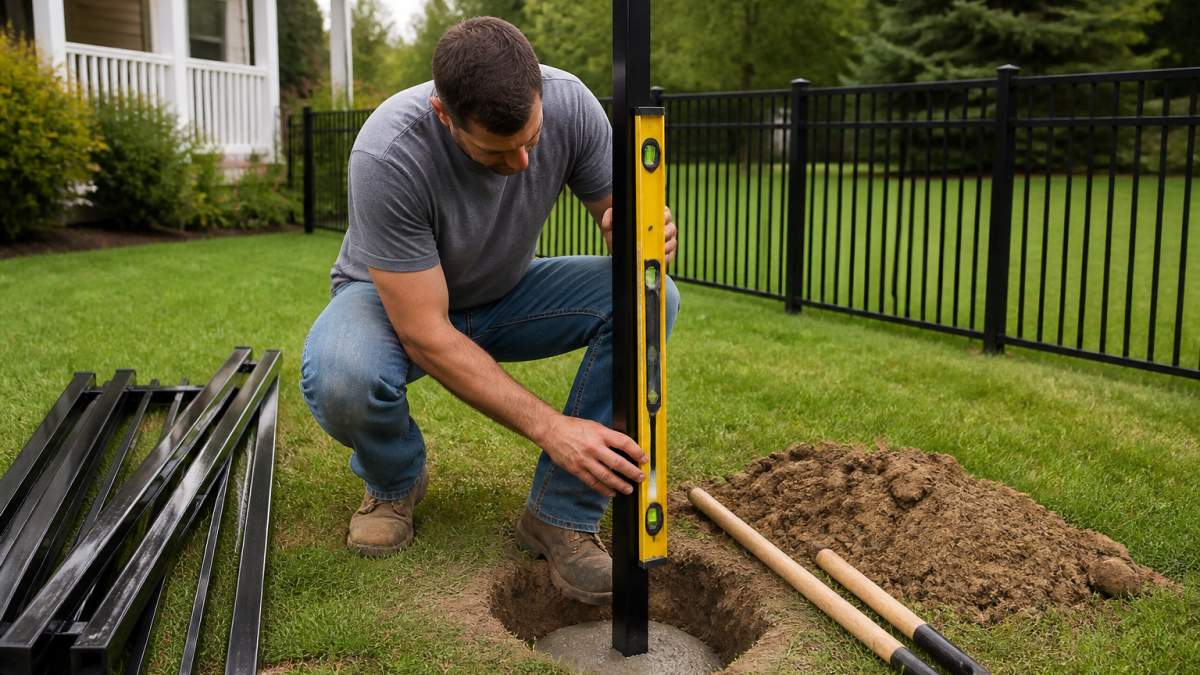
Installation decides performance more than the panel does. Set posts deeper than standard, anchor them in concrete, and follow the spacing your wind rating assumes.
Footing Depth and Concrete Anchoring
Deep-post anchoring confirms aluminum fencing performs against typical coastal wind loads when posts are set at increased depth and properly anchored, per Hicks Fencing’s aluminum installation best practices. No-dig configurations can also exceed standard residential strength expectations when built to spec.
Skipping concrete footings to save a weekend is the most common DIY failure. Posts that shift under lateral force void the wind rating and crack rails at the post-to-rail connection.
Permits, Repairs, and Maintenance After Storm Season
Check local building codes before you dig. Coastal jurisdictions often require pool barriers and wind-rated fencing, and a permit inspector will ask for your wind certificate. Keep the paperwork with your warranty.
After a storm, inspect post bases for movement, tighten post-to-rail connections, and replace individual panels rather than the whole run. Aluminum’s modular design makes storm repairs cheap, which is the quiet advantage over welded steel.
Photograph your fence line before storm season. Insurers process wind damage claims faster with dated pre-storm images.
Frequently Asked Questions
Do aluminum fences hold up in hurricane-force winds?
They can when they are engineered and installed for it. Open-style aluminum fencing lets airflow pass through, which cuts wind pressure compared to a solid barrier. Aluminum privacy panels are rated to resist wind loads without permanent deformation, though the actual rating depends on the manufacturer and the installation spec. Posts set at increased depth and properly anchored perform well against typical coastal wind loads, according to installation testing from Hicks Fencing and Screen Rooms.
What are the downsides of aluminum fences in storm-prone areas?
Aluminum is softer than steel and can bend under extreme pressure or flying debris, so it may not be the right pick for the most exposed sites. Louvered or horizontal slat designs can also catch more wind if they are oriented the wrong way. Proper footing depth matters more than the material itself.
How does picket spacing affect wind resistance in aluminum fencing?
Wider spacing between pickets lets more air move through the panel, which lowers the lateral force pushing against the fence. That is why open-style aluminum outperforms solid barriers in high-wind areas. If you want privacy and wind performance together, look for panels with documented wind permeability data rather than assuming a solid panel will hold. Picket spacing is one of the first specs to check on a wind-rated certificate.
Are there specific wind-rated aluminum fence panels I should look for?
Yes. Ask for panels with published wind load performance data, and check that the material meets a 6063-T6 alloy spec, which industry guidance for 2026 flags as a key marker of structural integrity. Installation method counts too.
How deep should fence posts be set for high wind areas?
Deep-post anchoring is the single biggest factor in whether an aluminum fence survives a storm. Installation testing in coastal environments confirmed that posts set at increased depths and properly anchored hold up against typical coastal wind loads, even when the panels themselves are standard. Concrete footings should extend below the frost line and be sized to the post height and local wind exposure. Check your local building code before digging, since footing depth requirements vary by jurisdiction.
High wind exposes every shortcut in a fence build, from footing depth to gauge thickness. Aluminum Fences Direct removes the guesswork with pre-assembled, American-made panels backed by a lifetime warranty and wholesale pricing, shipped directly to your site. Get a quote and build a fence line that holds when the wind doesn’t.