
Table of Contents
- Why Aluminum Fence Posts Need the Right Drill Bit
- HSS Drill Bits for Aluminum: The Budget-Friendly Workhorse
- Cobalt Drill Bits for Aluminum: When They Make Sense
- Carbide Bits: Do You Actually Need Them?
- Drill Bit Sizes for Fence Posts: Matching Bit to Hardware
- How to Drill Through Aluminum Without Damaging the Post
- Conclusion
- Frequently Asked Questions
Last Updated: October 6, 2026
Why Aluminum Fence Posts Need the Right Drill Bit
Aluminum is a soft, gummy metal, and that single property changes everything about how you drill it. The best drill bits for aluminum fence posts are sharp, standard-geometry bits with a 118-degree point and generous flute clearance, because aluminum chips weld themselves to a dull or slow-turning bit and clog the flutes fast.
At Aluminum Fences Direct, we ship pre-assembled aluminum panels to DIY homeowners every week, and the questions we get about drilling hardware holes tell us most people overthink the bit and underthink the technique. According to Metal Supermarkets’ guide to choosing drill bits for steel and aluminum, cobalt or high-speed steel bits handle aluminum well because the metal is so soft, and extremely hard bits such as carbide usually are not needed.
That’s worth sitting with, because a lot of tool roundups push you toward the hardest, most expensive bit on the shelf.
Aluminum fence posts are typically thin-walled, which makes them easy to drill but easy to deform if you push too hard or run the bit too fast. Get the bit and the speed right, and a post takes a hole in seconds. Get them wrong, and you’ll oval the hole, mar the finish, or snap a bit inside the post.
Below, we’ll cover which bit materials actually make sense, what sizes match common fence hardware, and the drilling technique that keeps posts looking factory-fresh.
HSS Drill Bits for Aluminum: The Budget-Friendly Workhorse
High-speed steel (HSS) bits are the right default for aluminum fence posts. They’re inexpensive, available everywhere, and cut aluminum cleanly when they’re sharp.
High-speed steel (HSS) is a tool steel alloy designed to hold a cutting edge at higher temperatures than plain carbon steel. For aluminum, a standard HSS bit with a 118-degree point does the job.
A few practical notes from our install experience:
- Buy two or three bits in the size you need. HSS dulls faster than cobalt on repeated holes.
- Look for bits labeled for non-ferrous metals or general-purpose use.
- Avoid brad-point or masonry bits. They’re built for wood and concrete, not metal.
- A split-point tip grabs the surface better and wanders less on thin post walls.
What most guides miss is that the coating matters less than the sharpness. A titanium-coated HSS bit that’s been dulled by drilling a dozen stainless screws will cut aluminum worse than a cheap, fresh HSS bit.
Buy a dedicated set of HSS bits and keep them for aluminum only. Once a bit has drilled steel, the edge degrades in a way you can’t see, and you’ll blame the aluminum when the bit starts squealing.
Cobalt Drill Bits for Aluminum: When They Make Sense
Cobalt bits are worth owning if you drill a lot of holes or work around harder metals. For a single fence installation, HSS is usually enough.
Cobalt drill bits are made from high-speed steel with added cobalt, which raises their heat resistance and edge retention. That makes them a better choice for stainless steel, cast iron, and repeated drilling without a break.
On aluminum specifically, cobalt bits cut well, but they don’t cut dramatically better than sharp HSS. You’re paying for durability, not speed.
When cobalt makes sense for a fence project:
- You’re installing dozens of posts and drilling hundreds of holes in one session.
- You’re also drilling through stainless gate hardware or steel brackets.
- You want one bit set that covers aluminum and the harder metals on the same job.
Metal Supermarkets notes that extremely hard bits like carbide usually aren’t necessary for aluminum, and the same logic applies to cobalt in most residential jobs. It works, it just costs more than the task requires.
Running any bit too fast on aluminum is the most common mistake we hear about. The chips melt and weld to the cutting edge, and the bit stops cutting even though it still looks fine. Slow your drill down and you’ll double the life of the bit.
Carbide Bits: Do You Actually Need Them?
No, carbide bits are overkill for aluminum fence posts. They’re built for abrasive materials like masonry, fiberglass, and hardened steel, not soft aluminum.
Carbide is extremely hard but also brittle. On thin aluminum, the bit can grab and chip, especially if you’re using a hand drill at an angle. You’ll spend more and risk more for no real gain.
There’s a genuine split of opinion in the industry here. Some tool suppliers recommend solid-carbide bits for aluminum, while others argue the softness of the metal makes hard bits unnecessary. For a homeowner drilling fence posts, the practical answer is simple: save the money.
Where carbide earns its place:
- Drilling through concrete or masonry to set posts
- Cutting hardened steel brackets or plates
- Production environments with CNC-controlled feed rates
For a residential aluminum fence install, a sharp HSS bit and a steady hand will outperform a carbide bit every time.
Drill Bit Sizes for Fence Posts: Matching Bit to Hardware
The right drill bit size for fence posts depends entirely on the hardware you’re installing. Match the bit to the screw or bolt shank, not the head, and always drill a hair undersized so the fastener bites.
Here’s a quick reference for the hardware most aluminum fence kits use:
| Hardware | Typical Shank Size | Drill Bit Size | Notes |
|---|---|---|---|
| Self-drilling screws | #10 or #12 | Match screw, no pilot | Self-drilling tips cut their own hole |
| Machine bolts | 1/4 inch | 1/4 inch bit | Slight clearance for alignment |
| Hinge bolts | 3/8 inch | 3/8 inch bit | Drill straight, hinges are unforgiving |
| Latch hardware | 5/16 inch | 5/16 inch bit | Measure the shank, not the head |
| Anchor bolts | 1/2 inch | 1/2 inch bit | Check the anchor spec sheet |
Two rules save the most headaches:
- Measure the shank, not the head. A screw with a 1/4-inch shank and a 3/8-inch head needs a 1/4-inch bit.
- Go undersized for self-tapping hardware. If a screw is designed to cut threads, drill slightly smaller so it bites.
Most pre-assembled aluminum panels from Aluminum Fences Direct arrive with hardware holes already punched or drilled at the factory, so you’ll mostly be drilling for gate hardware, hinges, and latches. That means fewer holes, but each one matters more.
How to Drill Through Aluminum Without Damaging the Post
The secret to drilling aluminum cleanly is low speed, steady pressure, and a sharp bit. Aluminum cuts fast when the bit is sharp and clogs instantly when it isn’t, so technique matters as much as the tool.
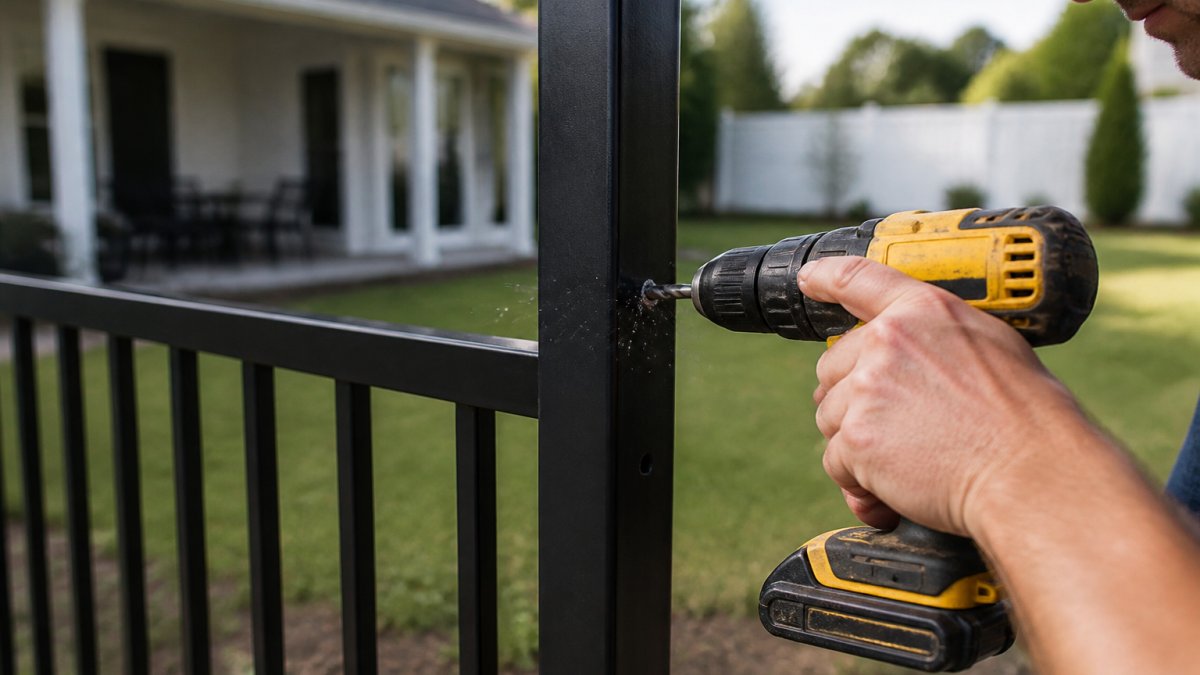
Follow these steps:
- Mark the hole with a center punch or an awl. A dimple keeps the bit from wandering on the smooth post surface.
- Set your drill to low speed. Most cordless drills have a low range. Use it. High speed generates heat and welds chips to the bit.
- Apply firm, even pressure. Let the bit cut. Pushing harder doesn’t speed things up, it just deforms the post.
- Add a drop of cutting fluid or light oil. It keeps the bit cool and helps chips clear the flutes.
- Back the post wall with a scrap of wood if you can reach inside. It prevents the thin wall from flexing.
- Clear chips often. Pull the bit out every few seconds and let the flutes empty. Clogged flutes are the number one cause of broken bits.
- Deburr the hole with a larger bit turned by hand or a deburring tool. Sharp edges cut hands and trap moisture.
If you’re drilling near the top or bottom rail, keep the hole at least an inch from any weld or joint. That’s where the post is strongest, and where a hole does the least harm to structural integrity.
A common mistake is drilling with a dull bit and blaming the aluminum. If the bit squeals or the chips come out as dust rather than curls, stop and swap the bit.
For aluminum fence posts, sharp HSS bits, low drill speed, and steady pressure will outperform expensive carbide every time. Match the bit to the hardware shank and back the post wall whenever you can.
Conclusion
Drilling aluminum fence posts is one of the easier parts of a DIY install, but the wrong bit or the wrong speed will turn a five-minute job into an afternoon of frustration. Stick with sharp HSS bits, step up to cobalt only if you’re drilling hundreds of holes, and skip carbide entirely.
When you order pre-assembled panels from Aluminum Fences Direct, most of the drilling is already done for you. Our 100% American-made aluminum fencing arrives with pre-assembled sections and gates, backed by a lifetime warranty, so the only holes left are for your gate hardware and hinges. We ship nationwide across the continental United States, and our wholesale pricing is built for DIY homeowners and contractors alike.
Get a quote from Aluminum Fences Direct and see how much you can save by handling the install yourself.
Frequently Asked Questions
What type of drill bit is best for drilling aluminum fence posts?
HSS drill bits work well for most aluminum fence post installations because aluminum is a soft metal and does not require extreme hardness. Cobalt bits last longer if you are drilling many holes or hitting harder alloys. Carbide is usually unnecessary for standard residential fence posts, according to Metal Supermarkets, which notes that extremely hard bits are not needed for soft aluminum.
What size drill bit should I use for an aluminum fence post?
Match the bit to your hardware. For a 1/4-inch bolt, use a 1/4-inch bit. For a #10 screw, use a 9/64-inch or 5/32-inch bit. Check your fence panel instructions for the exact fastener size. When in doubt, drill a test hole in scrap aluminum first to confirm the fit before committing to the post.
Should I use cutting oil when drilling aluminum?
Yes. A few drops of cutting oil or even a light machine oil reduce heat and help clear chips from the flutes. Without lubrication, aluminum can gall and stick to the bit, which dulls it quickly and can enlarge the hole. Apply oil at the start and add more if you feel resistance or see built-up material on the bit.
Can drilling a fence post affect its strength or warranty?
Drilling small holes for brackets, hinges, or latches is standard practice and does not compromise the structural integrity of aluminum fence posts. Follow the manufacturer’s guidelines for hole placement and size. If you are unsure whether a specific modification is covered, contact the supplier before drilling. Aluminum Fences Direct backs its fences with a lifetime warranty.