
Table of Contents
- Why Maintenance-Free Fencing Matters for Your Yard
- Quick Comparison Table: Maintenance-Free Fencing Options
- Aluminum Fencing: The Rust-Proof Option
- Vinyl Fencing vs. Aluminum: Pros and Cons
- Composite Fencing: Wood Look Without the Work
- Cost of Maintenance-Free Fencing Installation
- How to Clean Aluminum Fencing and Extend Its Life
- Factors to Consider When Choosing Your Fence
- Frequently Asked Questions
Last Updated: September 28, 2026
Why Maintenance-Free Fencing Matters for Your Yard
According to KD Fencing’s 2026 pricing analysis, homeowners spend an average of $8 per linear foot on chain link fencing, but that’s just the material cost. Add labor, maintenance supplies, and your time over the fence’s lifetime, and the true expense multiplies. This is where maintenance-free fencing changes the equation entirely.
Traditional wood fencing demands constant upkeep: paint peels, stain fades, posts rot. You’re locked into a cycle of repairs and repainting every few years. Maintenance-free fencing solutions eliminate those recurring costs entirely.
Maintenance-free fencing delivers peace of mind: install it and it stays protected from rust, rot, and weather damage for decades. Vinyl, composite, and aluminum resist moisture, UV rays, and temperature swings without paint, stain, or sealant. Lower lifetime cost plus your weekends back.
Quick Comparison Table: Maintenance-Free Fencing Options
| Material | Cost per Linear Foot | Best For | Key Strength | Main Limitation |
|---|---|---|---|---|
| Aluminum | $45 | Premium aesthetic, durability | Rust-proof, lightweight, elegant | Less privacy than solid panels |
| Vinyl | $22 | Budget-conscious homeowners | Low maintenance, durable | Can become brittle in extreme cold |
| Composite | $25-$45 | Natural wood look without upkeep | Rot-resistant, color-stable | Higher upfront cost than vinyl |
| Chain Link (vinyl-coated) | $8 | Basic boundary definition | Most affordable option | No privacy unless slats added |
Aluminum Fencing: The Rust-Proof Option
Aluminum fencing delivers premium aesthetics without rust vulnerability. Its powder-coated finish resists corrosion in coastal, humid, and freeze-thaw climates. Unlike steel, it doesn’t oxidize; unlike wood, it won’t rot or warp.
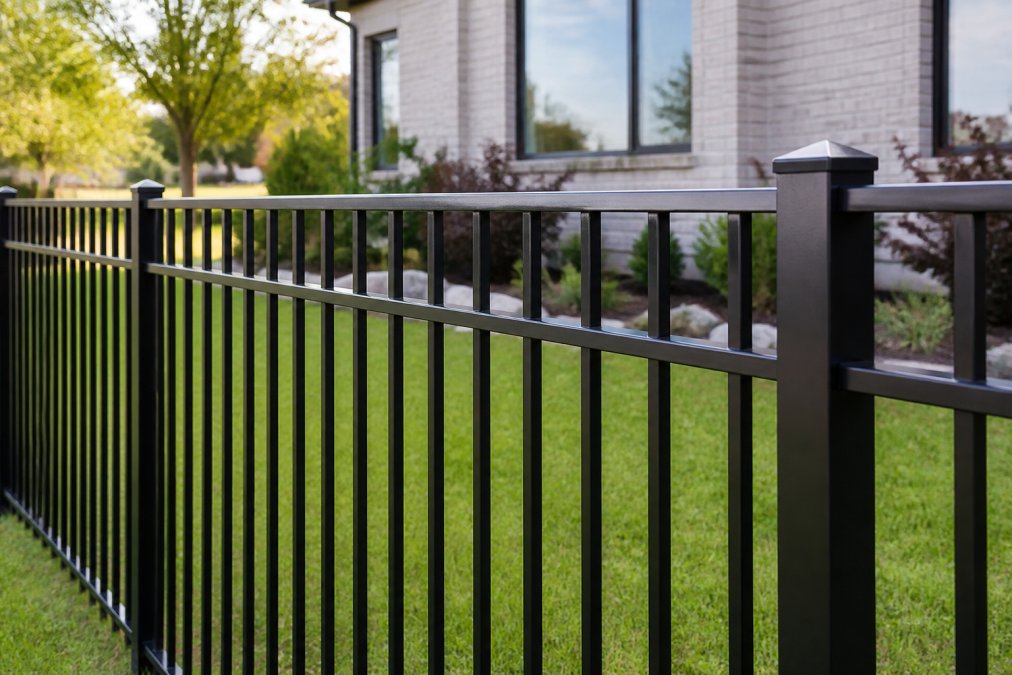
Aluminum’s construction eliminates common maintenance issues: rotting posts, warping boards, and rusting fasteners. The result is a fence that looks identical in year 10 as it did on installation day.
Aluminum’s lightweight nature simplifies DIY installation. Pre-assembled panels arrive ready to install.
Aluminum fencing performs exceptionally well in coastal and humid environments where vinyl can become brittle and composite may absorb moisture. If your property is near saltwater or experiences freeze-thaw cycles, aluminum’s corrosion resistance becomes a genuine advantage, not just a marketing claim.
The trade-off is privacy. Aluminum’s open-picket design suits front yards and pool enclosures but not complete privacy screens. For seclusion, choose composite or vinyl solid-panel options.
Vinyl Fencing vs. Aluminum: Pros and Cons
Vinyl and aluminum are the two dominant maintenance-free fencing paths. Both eliminate painting, staining, and sealing, and both resist rot and moisture. Climate suitability is the most consequential difference.
Cost and Initial Investment
Vinyl costs less upfront, around $22 per linear foot according to KD Fencing’s 2026 material pricing, making it the budget-friendly choice for homeowners prioritizing lower initial investment. It’s polyvinyl chloride (PVC), a plastic composite that doesn’t absorb water, splinter, or decay. Cleaning requires only soap and water. For most climates, vinyl delivers reliable performance for 20-30 years.
Aluminum carries a lifetime warranty and superior longevity in harsh conditions. The upfront premium recovers over 30+ years when you factor in zero maintenance and superior color retention.
Climate Performance: The Critical Differentiator
This is where material choice becomes genuinely consequential. Vinyl and aluminum perform dramatically differently depending on your regional climate pattern.
High-UV / Intense Sun Climates (Southwest, Southern California, Florida): Vinyl fades noticeably over 10-15 years in intense sun. Homeowners in Arizona and Southern California report visible color shift within 12-18 years. Aluminum’s powder-coated finish resists UV fading far more effectively. With 6+ hours of direct sun daily, aluminum’s color stability is a genuine advantage.
Freeze-Thaw Climates (Northeast, Midwest, Mountain States): Vinyl becomes brittle below 32°F and cracks under snow loads or impact. Vinyl panels commonly develop stress cracks after 8-12 years in high-freeze-thaw zones. Aluminum maintains flexibility from -40°F to 120°F without becoming brittle. With 20+ freeze-thaw cycles annually, aluminum’s temperature resilience is a practical advantage.
High-Humidity / Coastal Climates (Southeast, Gulf Coast, Pacific Northwest): Vinyl absorbs moisture at seams, causing mildew and algae buildup requiring quarterly cleaning. Aluminum’s powder-coated finish resists salt spray and humidity without moisture absorption. Coastal properties within 5 miles of saltwater benefit from aluminum’s corrosion resistance.
Moderate Climates (Mid-Atlantic, Upper Midwest, Northern California): Both materials perform reliably. Vinyl’s lower cost makes it the rational choice unless aesthetics or durability concerns dominate.
Structural and Maintenance Differences
Aluminum’s lightweight nature simplifies DIY installation. Vinyl panels are heavier and require more physical effort. Aluminum’s open-picket design suits front yards and pools but not privacy screens; vinyl offers solid-panel options.
Vinyl’s “maintenance-free” label masks a reality: it still requires occasional cleaning to prevent algae and mildew buildup, particularly in humid or shaded areas. The difference is you’re cleaning, not painting or staining, a meaningful distinction but not true zero-maintenance. In high-humidity regions, expect 2-4 cleaning sessions annually versus 1 for aluminum.
Repairability and Damage Scenarios
When damage occurs, repair costs differ significantly. A cracked vinyl panel requires replacing the entire section. Aluminum panels can be repaired by replacing individual pickets or frame sections. In high-wind zones or high-impact areas, aluminum’s modular repairability is a practical advantage.
Long-Term Value Calculation
Aluminum’s premium upfront cost becomes economical over 30+ years through zero maintenance, superior color retention, and lower repair costs. Vinyl offers the lowest total cost for moderate climates and 15-20 year stays. In freeze-thaw or high-UV climates, aluminum’s durability justifies the premium within 15-18 years. Selecting the right balance between longevity and initial investment remains essential when evaluating the broader spectrum of low-maintenance outdoor materials for your property.
Composite Fencing: Wood Look Without the Work
Composite fencing blends wood fibers with recycled plastic to deliver the aesthetic of natural wood without the maintenance burden. According to Talk of the House’s 2026 composite fence analysis, composite panels vary significantly in wind resistance, color longevity, and installation ease, factors that directly impact long-term satisfaction.
Composite looks like real wood with grain patterns, color variation, and texture. For homeowners who love wood’s appearance but despise upkeep, composite bridges that gap. It resists rot, decay, and insect damage without splintering, and maintains color better than vinyl.
Composite runs $25-$45 per linear foot and typically requires professional installation due to weight and complexity. Its environmental appeal comes from recycled plastic and reclaimed wood fiber, plus avoiding chemical treatments like paint and stain, benefits many homeowners overlook when calculating true value.
Composite fencing makes sense if your priority is natural aesthetics combined with low maintenance, and you’re willing to pay a premium for both. It’s the middle ground between vinyl’s budget appeal and aluminum’s durability.
Cost of Maintenance-Free Fencing Installation
Material cost is only part of the story. For DIY installation, material costs vary by type. Professional installation adds to the cost depending on terrain. Request a quote for your specific project to understand delivered pricing.
Lifetime cost favors maintenance-free materials dramatically.
DIY homeowners with flat or gently sloped yards seeking to maximize savings. Pre-assembled panels from Aluminum Fences Direct work best when terrain doesn’t require extensive post-hole adjustments or custom cutting.
Shipping costs vary by location and order size. Aluminum Fences Direct ships nationwide, with costs depending on distance and panel quantity. Request a quote for your specific project to understand delivered pricing.
How to Clean Aluminum Fencing and Extend Its Life
Aluminum doesn’t rust or rot, but benefits from occasional cleaning. Mix mild dish soap with water, scrub with a soft-bristle brush, and rinse. For stubborn buildup, use a pressure washer below 1,500 PSI. Coastal properties need quarterly cleaning; inland yards need annual cleaning; shaded areas may need twice-yearly attention.
Factors to Consider When Choosing Your Fence
Climate and Weather Exposure
Aesthetic Preference
Privacy Requirements
Property Slope and Terrain
Installation Capability and Error Consequences
Aluminum: Incorrect spacing is repairable; individual pickets or frame sections can be replaced. Post-hole errors are tolerable. Most DIY installations succeed on the first attempt.
Damage Scenarios and Repair Costs
Aluminum: A bent picket can be replaced. A damaged frame section can be replaced. Most repairs can be completed in 1-2 hours without removing the entire fence. Replacement parts are readily available from manufacturers.
Long-Term Budget and ROI
Code Compliance
Frequently Asked Questions
What type of fence has the least maintenance?
Aluminum and vinyl fencing require the least maintenance among durable options. Aluminum fencing is rust-proof and needs only occasional cleaning with soap and water. Vinyl fencing resists rot, fading, and warping without painting or staining. Both are superior to wood, which requires annual staining or sealing. Chain link fencing is also low-maintenance but offers no privacy unless slats are added. For homeowners prioritizing zero upkeep, aluminum and vinyl are the top choices.
How do aluminum and vinyl fencing compare in terms of pros and cons?
Aluminum fencing offers a premium aesthetic with rust-proof durability and increased property value. It requires minimal maintenance but provides less privacy than solid panels. Vinyl fencing is often more budget-friendly and resists moisture and warping. However, vinyl can become brittle in extreme cold. Aluminum suits homeowners wanting security and curb appeal; vinyl works better for budget-conscious buyers seeking privacy screening without annual maintenance. Get a quote for current pricing.
Is maintenance-free fencing really maintenance-free?
Maintenance-free is a relative term. While vinyl and aluminum don’t require painting, staining, or sealing, they still need occasional cleaning to maintain appearance and performance. Aluminum fencing should be rinsed with soap and water periodically to remove dirt and debris. Vinyl may need cleaning to prevent algae growth in humid climates. Neither material requires the intensive upkeep of wood, but ‘zero-upkeep’ is misleading marketing. They’re maintenance-minimal, not truly maintenance-free.
What is the cost of installing maintenance-free fencing?
Material costs vary by type. Installation costs depend on terrain, labor availability, and whether you choose DIY or professional installation. DIY pre-assembled panels eliminate labor costs but require tools and time. Professional installation adds to the cost depending on complexity. Get a quote from your supplier for accurate pricing tailored to your project.
How do I clean aluminum fencing to keep it looking new?
Clean aluminum fencing twice yearly or as needed with a soft-bristle brush and mild soap solution. Rinse thoroughly with a garden hose to remove soap residue. For stubborn stains, use a non-abrasive cleaner and avoid steel wool or harsh chemicals that damage the powder-coated finish. In coastal areas or regions with salt spray, rinse more frequently to prevent corrosion. Regular cleaning maintains the fence’s appearance and protects the powder-coated surface, extending its lifespan and keeping your property looking well-maintained.