
Table of Contents
- Why Buy Factory Direct Aluminum Fence Panels
- How to Measure for Aluminum Fencing
- Residential Aluminum Fence Grade Comparison
- Understanding Aluminum Fence Styles and Designs
- DIY Aluminum Fence Installation Guide
- Quick-Ship Inventory and Lead Times
- Maintenance, Durability, and Warranty Protection
- Permitting and HOA Compliance Checklist
- Frequently Asked Questions
Last Updated: October 1, 2026
Why Buy Factory Direct Aluminum Fence Panels
Buying factory direct aluminum fence panels eliminates the middleman markup that inflates prices at retail stores. When you skip the distributor and retailer layers, you’re purchasing directly from the manufacturer, which means significant savings on materials alone.
The global aluminum fencing market reached $4.93 billion in 2026, according to industry market valuation data, and the sector is projected to grow to $6.35 billion by 2030. This growth reflects rising demand from DIY homeowners who recognize the value of taking control of their fencing projects.
Aluminum Fences Direct offers pre-assembled panels shipped directly to your property, eliminating storage costs, transportation markups, and retail overhead that contractors pass on to customers.
Factory direct aluminum fence panels arrive ready to assemble, allowing DIY installation without specialized equipment. Most homeowners complete projects within a weekend, gaining timeline control and quality oversight.
Factory direct doesn’t mean lower quality, it means higher margins stay with you instead of retailers. American-made aluminum fencing from direct suppliers typically carries the same durability guarantees as retail alternatives.
How to Measure for Aluminum Fencing
Accurate measurements are the foundation of any successful fence installation. Before ordering factory direct aluminum fence panels, you need to know your perimeter length, account for slopes, and identify gate locations.
Measure the total perimeter using a measuring tape, working in sections for large properties. For irregular shapes, break the boundary into rectangles and triangles, then sum the linear distance to prevent ordering errors.
Identify elevation changes by walking your property and noting significant slopes. Sloped terrain requires “stepping down” where panels follow the slope in stair-step fashion. Document slope locations on your site sketch.
Mark gate openings precisely, measuring the width between posts. Standard residential gates are 3 or 4 feet wide. Reserve the correct opening width during your initial measurement phase.
| Measurement Task | Method | Why It Matters |
|---|---|---|
| Total perimeter | Measure each side, add together | Determines panel quantity needed |
| Elevation changes | Walk property, note slope locations | Affects installation method and panel orientation |
| Gate openings | Measure width between posts | Ensures gate kit compatibility |
| Post spacing | Verify standard 5-6 foot intervals | Confirms panel length requirements |
| Soil conditions | Inspect for clay, rock, sand | Determines post-setting difficulty |
Sketch your property layout on graph paper, marking gate locations, slopes, and obstacles. This becomes your ordering guide and installation reference.
Failing to account for slopes before ordering is the most common mistake. Panels designed for level ground won’t fit properly on sloped terrain. If your property has significant elevation changes, contact Aluminum Fences Direct for guidance on stepping configurations before finalizing your order.
Residential Aluminum Fence Grade Comparison
Residential-grade aluminum differs from commercial-grade in wall thickness, rail design, and load-bearing capacity, helping you choose the right product for your application.
Standard residential-grade aluminum provides adequate strength for pool enclosures and property boundaries while remaining manageable for DIY installation. Commercial-grade uses thicker materials for higher impact resistance.
For most homeowners, residential grade delivers the durability needed without excess cost. According to aluminum fencing industry analysis, residential-grade panels handle standard residential loads effectively when properly installed. The deciding factor is your specific use case: pool enclosure, pet containment, or perimeter security.
Powder-coated finishes protect against rust, fading, and weathering. Aluminum itself doesn’t rust, but powder coating extends fastener lifespan and prevents oxidation discoloration. Aluminum Fences Direct applies multi-stage powder coating designed to withstand years of exposure.
Compare options by examining rail design and picket spacing. Smooth-top pickets offer clean aesthetics and easier cleaning. Ornamental styles add visual interest but require more maintenance. Taller fences with wider rail spacing may require additional bracing in high-wind areas.
For residential applications, aluminum fence grade matters less than installation quality and powder coating durability. A properly installed residential-grade fence from a reputable supplier outlasts poorly installed commercial-grade alternatives.
Understanding Aluminum Fence Styles and Designs
Aluminum fence styles range from simple utilitarian designs to ornamental options that enhance curb appeal. Your choice affects both aesthetics and maintenance requirements.
Smooth-top designs feature straight vertical pickets with no decorative elements, popular for pool code compliance. They’re fastest to install and require minimal cleaning.
Ornamental styles incorporate decorative tops and complex rail arrangements, enhancing appearance but requiring more cleaning. They work well for front-facing sections.
Horizontal rail designs run rails parallel to the ground, suiting contemporary homes and creating a less-enclosed feeling. They’re easier to clean but may not meet pool code requirements.
Mixed designs combine horizontal and vertical elements for visual interest and code compliance.
Aluminum fence panels typically come in 4, 5, or 6-foot heights. Shorter panels work for pet containment; taller panels provide privacy and security.
Quick-ship inventory offers standard styles in 3-5 day delivery. Custom fabrication takes 2-3 weeks but allows color matching and non-standard heights.
DIY Aluminum Fence Installation Guide
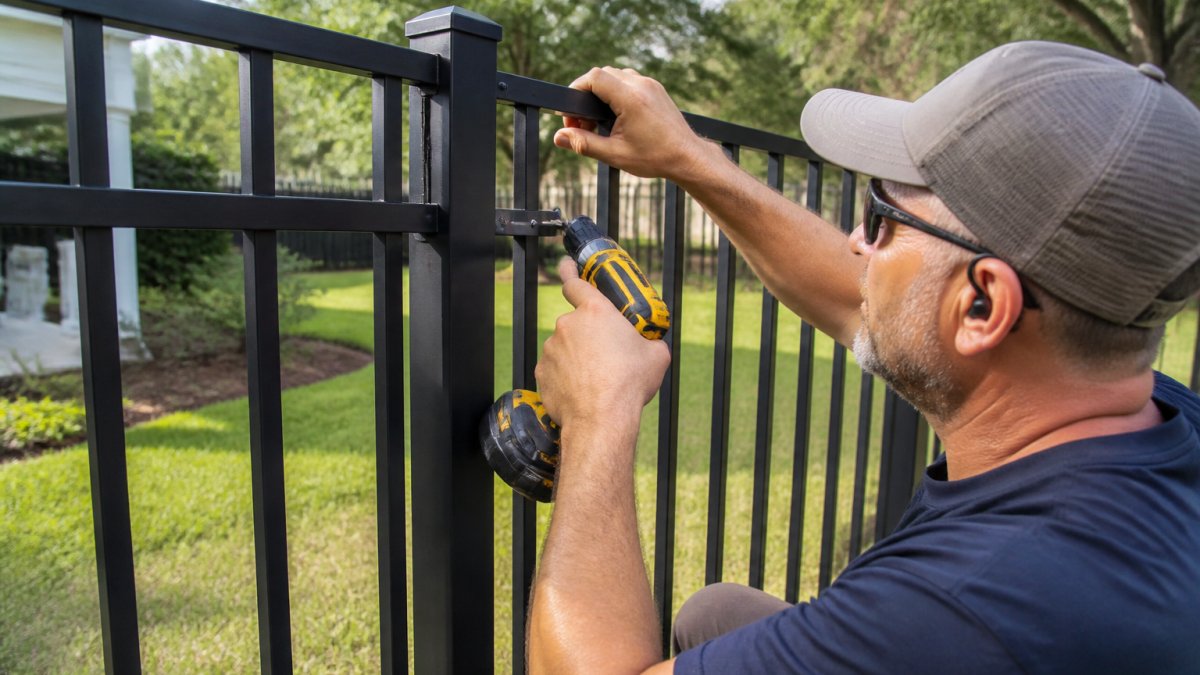
Installing factory direct aluminum fence panels yourself requires careful preparation, proper tools, and methodical execution. Most homeowners complete a basic residential project in 2-3 days.
Preparing Your Site and Materials
Clear your installation path of debris. Mark post locations using string and stakes, typically spaced 5 to 6 feet apart. For sloped terrain, use a level to establish consistent post heights.
Gather installation materials: post-setting brackets, fastening hardware, a level, power drill, measuring tape, and rubber mallet. Verify all hardware arrives before starting.
Inspect panels for shipping damage. Document any structural damage with photos and contact the supplier immediately.
Dig post holes 24-30 inches deep using a post-hole digger or power auger. For sloped sites, dig deeper on the downhill side to maintain consistent panel height.
Set posts in concrete, ensuring they’re perfectly vertical. Allow concrete to cure fully (24-48 hours) before hanging panels.
Assembling Panels and Setting Posts
Attach horizontal rails to vertical posts using included bracket systems with pre-drilled holes. Tighten bolts snugly but not over-tight, which can strip aluminum threads.
Hang the first panel between two posts using shims for spacing. Secure with all fasteners and check for level and plumb before final tightening.
Continue panel installation sequentially, checking alignment as you progress. Uneven spacing or tilted panels become obvious when you stand back and view the fence line. Make adjustments immediately rather than waiting until the entire fence is assembled.
Install gates last, after all panels are secure. Gate hinges and latches require precise alignment. Follow manufacturer instructions carefully, gates that bind or misalign are the most common installation complaint.
The most common DIY installation mistake is rushing through post-setting. Spending extra time ensuring posts are perfectly vertical and properly spaced prevents panel alignment issues that are difficult to correct later.
Quick-Ship Inventory and Lead Times
Quick-ship aluminum fence panels offer 3-5 day delivery for standard residential styles. This rapid turnaround appeals to homeowners eager to start projects without extended waiting periods.
Quick-ship inventory includes popular styles in standard colors (white, bronze, black) and common heights (4, 5, and 6 feet). Manufacturers maintain these items in warehouse stock specifically to meet rapid-delivery demand. According to aluminum fencing industry supply trends, quick-ship models have become increasingly common as suppliers recognize DIY homeowner demand. Selecting these pre-manufactured panels streamlines the installation process, though the broader process of choosing backyard fencing requires careful consideration of your property layout and long-term landscaping goals.
Custom orders, non-standard colors, heights, or decorative elements, typically require 2-3 weeks for fabrication and delivery. The manufacturing process for custom panels involves cutting, welding, and powder coating to specification, which takes longer than shipping pre-made inventory.
Shipping costs vary by location and order size. Factory direct suppliers calculate shipping based on weight and destination zip code.
Maintenance, Durability, and Warranty Protection
Aluminum fencing requires minimal maintenance compared to wood or vinyl alternatives. The material doesn’t rot, warp, or require refinishing, which explains its growing popularity for residential applications.
Aluminum fencing offers the lowest maintenance of any residential fencing material. A simple annual cleaning and occasional hardware tightening keep panels looking good for decades.
Permitting and HOA Compliance Checklist
Fence installations often require permits and must comply with local building codes and HOA restrictions. Failing to address these requirements early can delay projects or force costly modifications.
- Contact local building department for height and setback requirements
- Obtain building permit and submit required documentation
- Review HOA bylaws and architectural guidelines
- Submit fence plans to HOA for approval if required
- Verify pool code compliance if applicable (ASTM F1582 standards)
- Call 811 before digging post holes
- Schedule building inspection after installation
- Keep copies of all permits and inspection reports
Frequently Asked Questions
What is the average cost of buying factory direct aluminum fence panels?
Your total cost depends on the number of panels needed, your property’s dimensions, customization options, and shipping distance. Request a quote from your supplier for accurate pricing based on your specific project requirements and delivery location.
Is it cheaper to install aluminum fencing yourself versus hiring a contractor?
DIY installation using factory direct panels typically saves thousands in labor costs. Because panels arrive pre-assembled with installation hardware included, most homeowners can complete installation without specialized skills or equipment. However, total savings depend on your property’s complexity, soil conditions, and whether you need to obtain permits. Factor in your time and any tools you may need to rent.
How do I know if aluminum fence panels meet pool code compliance in my state?
Pool code requirements vary by state and local jurisdiction. Before purchasing, contact your local building department to confirm fence height, spacing between pickets, and gate specifications required for your area. Most residential-grade aluminum fence panels are designed to meet standard pool codes with 4-inch picket spacing and appropriate heights. Verify your specific panels’ specifications with your supplier and provide documentation to your building inspector.
What should I do if my aluminum fence panels arrive damaged or don’t fit my property?
Reputable factory direct suppliers offer return policies and damage coverage. Inspect panels immediately upon delivery and document any damage with photos. Contact your supplier’s customer service within the specified timeframe (typically 30 days) to report issues. Most suppliers will replace damaged panels or accept returns if panels don’t meet your needs. Confirm the return and warranty policy before purchasing to understand your protection.
Installing factory direct aluminum fence panels lets you take control of your property’s security and appearance while avoiding contractor markups that inflate final costs. Aluminum Fences Direct delivers American-made panels with lifetime warranty protection, pre-assembled for easy DIY installation. Get a quote today and start your fence project within days, not months.