
Table of Contents
- Why Pool Fencing Is the Most Effective Drowning Prevention Measure
- Pool Fence Safety Regulations: What Every Homeowner Must Know
- Comparing Pool Fencing Materials: Aluminum, Mesh, Glass, and Wrought Iron
- DIY Aluminum Pool Fence Installation: A Step-by-Step Overview
- The Cost of Aluminum Pool Fencing: What Drives Your Investment
- DIY vs. Professional Installation: Risk, Savings, and Code Compliance
- Smart Home Integration and Long-Term Material Sustainability
- Conclusion: Choosing the Right Pool Fencing for Safety and Value
- Frequently Asked Questions
Last Updated: September 25, 2026
Why Pool Fencing Is the Most Effective Drowning Prevention Measure
Pool fencing is a physical barrier installed around a swimming pool to prevent unsupervised access, and it remains the single most effective drowning prevention measure available to homeowners. Research from the Pediatric Trauma Society estimates that pool fencing is roughly 76% effective at preventing drowning, while Clifford Law Offices reports that four-sided isolation fencing cuts a child’s drowning risk by 83% compared with three-sided fencing.
Pool Fence Safety Regulations: What Every Homeowner Must Know
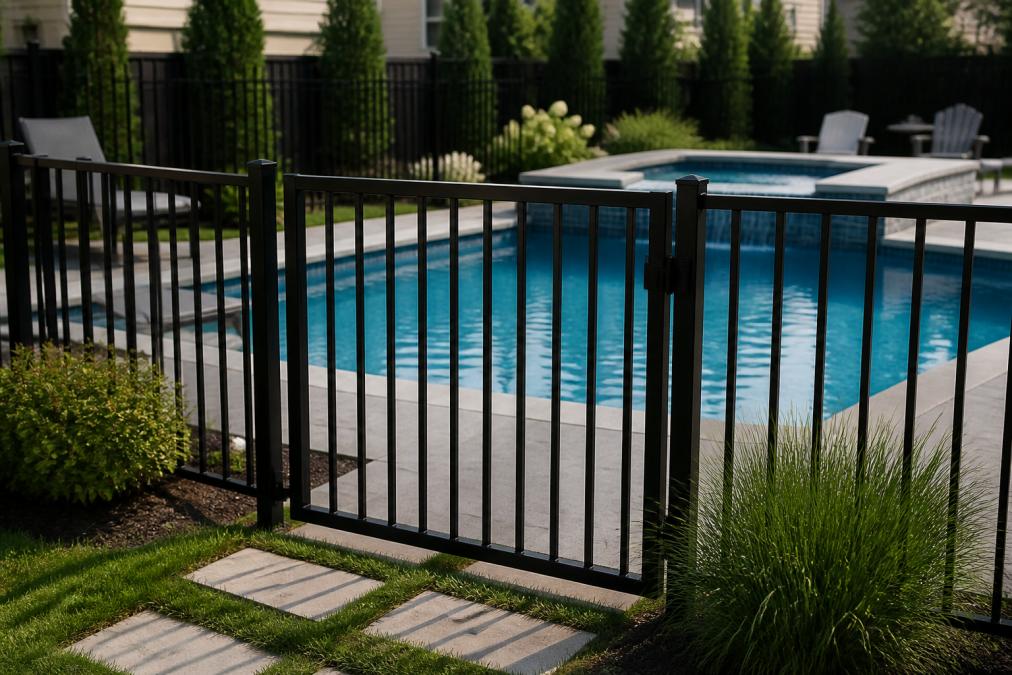
Pool fence safety regulations exist to do one job: keep a child from reaching the water without an adult noticing. Most states and municipalities adopt some version of the BOCA codes or the International Residential Code (IRC), but enforcement varies widely by jurisdiction, enough to change what you order.
The Baseline Code Requirements
The core requirements are consistent across most jurisdictions:
- Minimum height: 48 inches measured on the side facing away from the pool
- Gate hardware: self-closing and self-latching mechanisms that release a child but not an adult
- Vertical spacing: openings no wider than 4 inches so a small body cannot pass through
- Climb resistance: no horizontal rails that create a ladder effect
- Bottom clearance: no more than 2 inches of gap under the lowest rail on the pool side
“The fence must be a minimum of 48 inches tall (or taller, depending on distance between horizontal rails). The middle horizontal rail must be at least 45 inches above the ground.”
State-by-State Compliance: Where the Rules Diverge
The 48-inch baseline is a floor, not a ceiling, and several states layer their own amendments on top of it. A few patterns worth knowing before you order panels:
- California, Under HSC §115923, glass pool fencing carries stricter requirements: a minimum height of 60 inches, a maximum bottom gap of 2 inches, and a maximum opening of 4 inches between panels. California also recognizes an approved safety pool cover or an alarm as an alternative to a full barrier in some residential scenarios, which most other states do not.
- Arizona, Florida, and Texas, These states have among the highest residential pool counts in the country and tend to enforce the IRC barrier provisions closely, with many municipalities requiring a permit and a final inspection before the pool can be filled or reopened.
- New York and New Jersey, Several counties here require the barrier to be in place before a certificate of occupancy or a pool permit is issued, and some require the gate to swing away from the pool.
- States without a statewide pool barrier statute, In these jurisdictions, the rule is set at the county or city level, which means two homes a mile apart can face different requirements.
How to Verify Your Local Requirements in Three Steps
- Search your county or city building department website for “pool barrier” or “pool enclosure” requirements. Look for the adopted code year, not just the code name.
- Ask three specific questions when you call: What is the required minimum height? What gate hardware standard applies? Is a permit or inspection required, and at what stage?
- Get the answer in writing, an email from the inspections desk is your protection if a later inspector interprets the code differently.
A fence that meets the IRC baseline can still fail a local inspection if your jurisdiction has adopted a stricter amendment. Confirm the local height and gate standard before panels ship, not after they are set in concrete.
Comparing Pool Fencing Materials: Aluminum, Mesh, Glass, and Wrought Iron
Material choice drives cost, maintenance, and how well the finished barrier blends into your backyard. Four options dominate the residential market, each trading something to get something.
| Material | Typical Lifespan | Maintenance | Best For |
|---|---|---|---|
| Aluminum | 20+ years | Wipe-down only | DIY installs, pool code compliance |
| Mesh | 5-7 years | Seasonal replacement | Rentals, temporary barriers |
| Glass | 15-20 years | Regular cleaning | High-end aesthetics, tight lots |
| Wrought iron | 30+ years | Repainting every few years | Traditional curb appeal |
Aluminum: The Code-Compliance Default
Powder-coated aluminum resists rust and rot without repainting, which is why it has become the default for code-compliant pool fencing. The powder coat is applied electrostatically and cured under heat, bonding to the metal rather than sitting on top of it, which keeps the finish intact through sun, salt air, and pool splash. Panels are typically rackable, so they follow a slope without stepping, keeping the top rail continuous and avoiding the ladder-effect gaps inspectors flag.
Wrought Iron: Heavier Look, Heavier Upkeep
Wrought iron delivers heavier visual weight and traditional curb appeal, and a well-maintained iron fence can outlast almost anything else on the list. The cost is maintenance: iron rusts where the finish is breached, so it needs periodic recoating, often every few years in humid or coastal climates.
Glass: Disappears Visually, Demands Attention
Tempered glass disappears visually and satisfies the strictest height rules, making it a strong fit for tight lots and high-end builds. It also costs the most up front and shows every fingerprint, water spot, and paw print. Glass panels are heavy, so posts and footings must be engineered for the load, not a weekend DIY material for most homeowners.
Mesh: The Budget and Rental Option
Mesh fencing is the budget option and the easiest to remove and reinstall, which is why it shows up on rentals and seasonal pools. The catch is lifespan: a tension-based system loses tautness over time, and most mesh barriers need replacing within a decade. It also offers less climb resistance than a rigid barrier, so treat it as a secondary layer where code requires a rigid fence.
Sustainability and Material Lifespan: The Long Game
Environmental impact in fencing plays out over decades, not seasons. Aluminum is infinitely recyclable, and much U.S. aluminum already contains recycled content. Once powder-coated, an aluminum fence needs no chemical treatment, repainting, or sealant, so the recurring cost of a barrier replaced or recoated every few years does not apply. Wrought iron is also highly recyclable but carries recurring recoating costs.
The most sustainable pool fence is the one you install once. Long material lifespan beats any short-term savings on a barrier that fails code or corrodes within a decade.
Matching Material to Your Site
- Flat, straightforward yard, DIY budget: powder-coated aluminum
- Steep grade or irregular corners: rackable aluminum panels
- Tight lot where sightlines matter: tempered glass, professionally installed
- Rental or seasonal pool: removable mesh as a secondary layer
- Traditional architecture, maintenance budget available: wrought iron
DIY Aluminum Pool Fence Installation: A Step-by-Step Overview
DIY aluminum pool fence installation is realistic for a homeowner with basic tools, because pre-assembled panels eliminate most fabrication work. Most first-time installers finish a typical backyard in a weekend.
Tools, Site Prep, and Panel Assembly Basics
Total time: 1-2 days for an average yard
Difficulty: Beginner to intermediate
What you’ll need:
- Post-hole digger or auger
- Concrete mix and a level
- String line and marking paint
- Cordless drill and socket set
Steps:
- Mark the fence line and confirm the layout meets your local height and spacing rules
- Dig post holes at even intervals, accounting for slope
- Set posts in concrete and check plumb before the mix cures
- Slide pre-assembled panels into the post channels
- Mount and adjust the self-closing, self-latching gate
- Walk the perimeter and confirm no gap exceeds 4 inches
On sloped ground, rack the panels to follow the grade rather than stepping them. Racking keeps the top rail continuous and avoids the ladder-effect gaps that inspectors flag.
The Cost of Aluminum Pool Fencing: What Drives Your Investment
The cost of aluminum pool fencing depends on linear footage, panel height, gate count, and shipping distance, so no single figure applies to every yard. What you control is the labor line, and that is where DIY changes the math.
Three factors move the number most:
- Total linear feet of barrier required, including the gate opening
- Height and grade of the panels, since taller and heavier-gauge sections cost more
- Freight to your location, which varies by region and order size
DIY vs. Professional Installation: Risk, Savings, and Code Compliance
Installing the gate on a slope without adjusting the latch strike plate is the most common DIY failure. The gate drifts open, fails the self-latching test, and the whole barrier gets flagged at inspection.
Before you order, confirm three things with your local building department: the required height, the gate hardware standard, and whether a permit or inspection is required. Get it in writing.
Smart Home Integration and Long-Term Material Sustainability
Smart home integration is the newest angle in pool fencing, and it is genuinely useful rather than a gimmick. Gate sensors that trigger a phone alert when the latch opens add a second layer of awareness on top of the physical barrier, which matters most when a pool is not in active use.
Conclusion: Choosing the Right Pool Fencing for Safety and Value
The right pool fencing balances code compliance, material lifespan, and the labor you are willing to take on. Four-sided isolation fencing is the standard the data supports, and aluminum gets you there without repainting, rusting, or replacing panels every few years.
Frequently Asked Questions
What are the legal requirements for pool fencing in the U.S.?
Most U.S. pool codes require a minimum fence height of 48 inches, self-closing and self-latching gates, and vertical spacing that prevents a child from climbing. Some states, like California, mandate 60 inches for glass fencing under HSC §115923. Always check your local building department, as requirements vary by state and municipality. Aluminum Fences Direct offers pre-assembled panels that meet common code standards, but you should verify with your local inspector before ordering.
How much does aluminum pool fencing cost compared to other materials?
The cost of aluminum pool fencing depends on panel height, linear footage, gate count, and shipping. Aluminum typically costs less than wrought iron or tempered glass but more than basic mesh. Because Aluminum Fences Direct sells wholesale direct to homeowners and contractors, you avoid middleman markups. For a precise quote based on your yard’s dimensions, request a quote on their website. Many DIYers report saving thousands by installing panels themselves rather than hiring a local contractor.
Can I install a pool fence myself to save money?
Yes, many homeowners successfully complete DIY aluminum pool fence installation. Pre-assembled panels and self-closing gates simplify the process. You’ll need basic tools like a post-hole digger, level, and drill. The main challenges are uneven ground and ensuring gates latch correctly. Aluminum Fences Direct provides installation guides, and their panels are designed for straightforward assembly. If your yard slopes significantly, you may need adjustable brackets or professional advice.
How does aluminum fencing compare to mesh or glass for pool safety?
Aluminum fencing offers a strong balance of durability, low maintenance, and cost. Mesh is removable and cheaper but can sag over time. Glass provides clear views but costs more and requires frequent cleaning. Four-sided fencing, regardless of material, reduces drowning risk by 83% compared to three-sided fencing, according to Clifford Law Offices. Aluminum is corrosion-resistant, powder-coated, and backed by a lifetime warranty from Aluminum Fences Direct, making it a reliable long-term choice.