
Table of Contents
- Why Aluminum Fence Maintenance Matters
- How to Clean Aluminum Fence Properly
- Removing Oxidation From Aluminum Fence
- Seasonal Inspection and Hardware Maintenance
- Preventing Corrosion and Rust on Aluminum Fencing
- Aluminum Fence Life Expectancy and Long-Term Care
- Common Maintenance Myths vs. Reality
- Frequently Asked Questions
Last Updated: September 21, 2026
Why Aluminum Fence Maintenance Matters
Proper aluminum fence maintenance is essential for preserving your investment and ensuring long-term performance. Homeowners choose aluminum fencing for its durability and low-maintenance appeal, but “low-maintenance” does not mean “no maintenance.”
The reality is straightforward: aluminum fencing does not rust or rot like wood or steel, but it still requires attention. Neglecting basic care can lead to oxidation, compromised fasteners, and gate misalignment. A seasonal inspection routine takes just a few hours annually and prevents costly repairs down the road.
At Aluminum Fences Direct, we’ve helped thousands of DIY homeowners understand that maintenance is about prevention, not panic. Clean panels, secure hardware, and timely inspections keep your fence performing at its best for decades. This guide walks you through exactly what you need to do, when to do it, and why each step matters.
Most homeowners wait until something breaks to inspect their fence. The real savings come from catching small issues, loose bolts, debris buildup, minor surface scratches, before they compound into structural problems.
How to Clean Aluminum Fence Properly
Cleaning your aluminum fence properly removes grime buildup and prevents oxidation before it takes hold. The process is straightforward and requires minimal time investment. Residential aluminum fencing should be cleaned with a bucket of warm water and mild soap once or twice a year to maintain a bright and consistent surface appearance.
Supplies and Tools You’ll Need
Gather these items before you start:
- Bucket (5-gallon capacity works well)
- pH-neutral soap or mild detergent
- Soft cloth or non-metallic sponge
- Soft-bristled brush (avoid wire brushes)
- Garden hose with adjustable spray nozzle
- Towels or squeegee for drying
- Protective gloves (optional)
- Step ladder for upper sections
Do not use abrasive scrubbers, steel wool, or harsh chemicals. These damage the protective powder coating and expose bare aluminum to oxidation. The goal is gentle, consistent cleaning that respects the fence’s finish.
Step-by-Step Cleaning Process
Follow this process twice yearly or as needed when grime accumulates:
-
Rinse the fence with plain water. Use your garden hose to remove loose dirt and debris. A gentle spray prevents damage to welds and fasteners. Pay special attention to horizontal rails where leaves and dust settle.
-
Mix your cleaning solution. Fill your bucket with warm water and add a small amount of pH-neutral soap. Stir gently. The solution should be mild, you are cleaning, not stripping the finish.
-
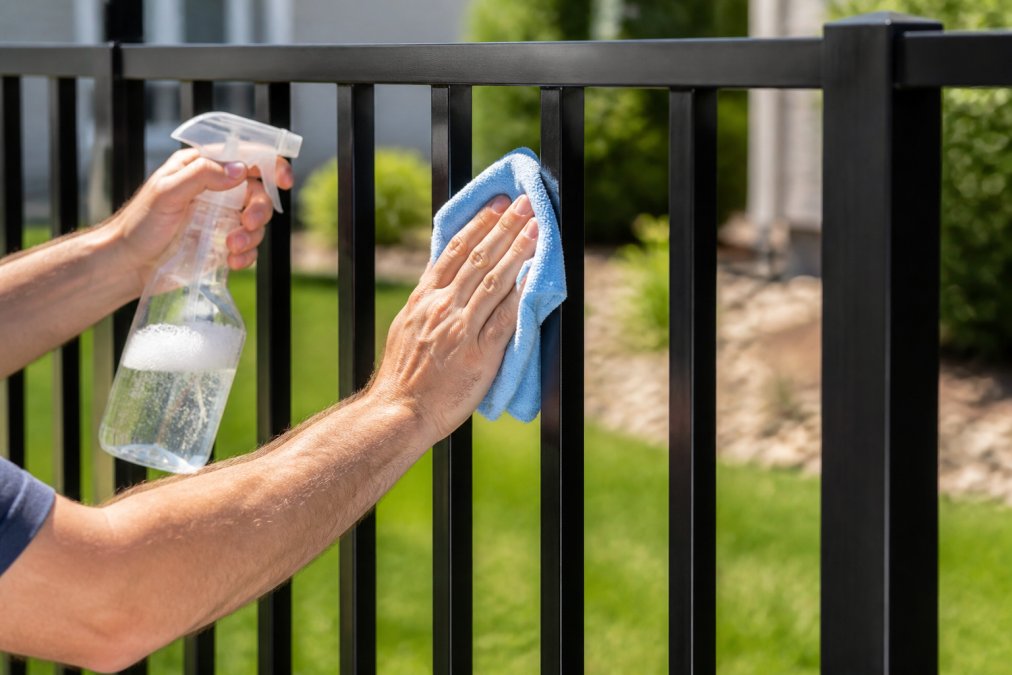
Apply the solution with a soft cloth. Dip your cloth or non-metallic sponge into the mixture and wipe down each panel. Work from top to bottom so dirty water runs downward naturally. Use a soft-bristled brush for textured areas or stubborn grime.
-
Rinse thoroughly with clean water. This step is critical. Any soap residue left behind can attract dirt and create dull spots. Use your hose to rinse each section completely until the water runs clear.
-
Dry the fence. Towel dry high-traffic areas and use a squeegee for large sections. This prevents water spots and mineral deposits, especially important if you have hard water.
-
Inspect as you clean. While working, watch for loose bolts, surface scratches, or areas where the coating has worn through. Note these for your maintenance checklist.
The entire cleaning process typically takes 2-4 hours for an average residential fence. Breaking it into two shorter sessions (spring and fall) is often easier than one long day.
Removing Oxidation From Aluminum Fence
Oxidation appears as a white or gray powdery coating on aluminum surfaces. It is a natural reaction between aluminum and oxygen, but it compromises the fence’s appearance and can lead to deeper corrosion if left unchecked. Aluminum fencing is categorized as “incredibly low maintenance” because it does not rot or rust like wood or other metal fencing types.
However, oxidation still requires attention. Here’s how to address it:
For light oxidation: Use a non-abrasive aluminum cleaner designed specifically for oxidation removal. Apply according to product directions, typically by rubbing gently with a soft cloth. Rinse thoroughly and dry. This works for surface-level discoloration.
For moderate oxidation: Mix a solution of equal parts white vinegar and water. Apply with a soft cloth and let it sit for 10-15 minutes. The mild acidity helps break down oxidation without damaging the protective coating. Scrub gently with a soft-bristled brush, then rinse completely and dry.
For severe oxidation: Consult with a professional or contact Aluminum Fences Direct for guidance on specialized treatments. Severe cases may indicate underlying corrosion at welds or fasteners that requires expert attention.
Seasonal Inspection and Hardware Maintenance
Regular inspections catch problems early when they are easiest and cheapest to fix. Homeowners should perform routine inspections of their aluminum fences at least twice a year to identify potential issues such as debris buildup or hardware concerns, ensuring the fence remains in top condition.
Spring and Summer Checklist
Spring inspection prepares your fence for warmer months and heavy use:
- Check all bolts, screws, and fasteners for tightness. Use an appropriate wrench or screwdriver to tighten any loose hardware.
- Inspect welds where panels connect to posts. Look for cracks or separation.
- Test gate hinges and latches. Gates should swing smoothly without binding or sagging.
- Remove debris from horizontal rails and corners where dirt accumulates.
- Check for surface scratches or areas where the powder coating has worn away. Mark these for touch-up paint application.
- Verify gate alignment. A properly aligned gate closes smoothly and latches securely.
- Clean the entire fence using the process outlined above.
Summer maintenance focuses on preventing heat-related issues:
- Lubricate gate hinges with a light machine oil or silicone spray. Do this monthly during heavy-use seasons.
- Inspect latch functionality. Ensure gates close and lock smoothly.
- Check for any signs of rust on fasteners or welds, particularly in humid climates.
- Remove any vegetation touching the fence that could trap moisture.
Fall and Winter Checklist
Fall preparation protects your fence through winter weather:
- Remove leaves and debris from all horizontal surfaces and corners.
- Inspect the entire fence for damage from summer storms or wind.
- Check for any loose panels or posts that may have shifted during warmer months.
- Tighten all hardware again before winter stress begins.
- Clean the fence thoroughly to remove grime before winter weather sets in.
Winter inspection focuses on storm damage and freeze-thaw effects:
- After heavy storms, inspect for bent panels, loose fasteners, or damaged sections.
- Check for ice accumulation in corners or on horizontal rails. While aluminum does not rust, ice buildup can create stress on fasteners.
- Verify gate operation in cold weather. Ice or frost can affect hinge movement.
- Inspect welds and fasteners for any signs of stress or separation caused by freeze-thaw cycles.
Do not ignore loose hardware in winter. Freeze-thaw cycles expand and contract metal, causing bolts to loosen further. A bolt that is slightly loose in fall can become dangerously loose by spring if not addressed.
Preventing Corrosion and Rust on Aluminum Fencing
While aluminum does not rust like steel, corrosion can still occur at specific points. Aluminum fences require attention to welds and fasteners where rust can potentially form, necessitating sanding and the application of rust inhibitors.
Here’s what you need to know:
Galvanic corrosion occurs when aluminum contacts dissimilar metals like steel bolts or stainless fasteners. The different metals create a chemical reaction that accelerates corrosion. Quality aluminum fencing uses stainless steel or aluminum fasteners to prevent this. If your fence has steel bolts, consider replacing them with stainless alternatives during your next maintenance cycle. Similar electrochemical principles apply to other metal structures around your property, making consistent outdoor furniture maintenance essential for preventing the spread of oxidation across your landscape.
Environmental factors accelerate corrosion.
Aluminum Fence Life Expectancy and Long-Term Care
Long-term care focuses on three priorities:
Protective coatings. The powder coating is your fence’s armor. Maintain it by cleaning regularly, avoiding abrasive tools, and addressing scratches immediately. A small scratch left unattended can develop into a larger oxidation problem within months.
Common Maintenance Myths vs. Reality
Myth: Aluminum fencing never needs cleaning. Reality: While aluminum does not rot or rust like wood or steel, it still accumulates dirt, grime, and oxidation. Cleaning twice yearly keeps it looking new and prevents oxidation from establishing itself.
The biggest mistake homeowners make is treating aluminum fencing as truly maintenance-free. It is durable and low-maintenance, but neglect leads to preventable problems. Consistent, basic care keeps your fence performing at its best.
Frequently Asked Questions
How often should I clean and inspect my aluminum fence?
Clean your aluminum fence with mild soap and warm water once or twice per year to maintain its appearance. Perform routine inspections at least twice yearly to identify debris buildup, loose hardware, or potential issues. In coastal or high-salt environments, increase cleaning frequency to prevent salt spray damage and corrosion resistance degradation. Regular maintenance extends the life of your fence and catches problems early.
What is the life expectancy of an aluminum fence?
Residential aluminum fencing typically lasts 20-30 years or longer with proper maintenance. The aluminum fence life expectancy depends on environmental factors, protective coatings quality, and how consistently you perform preventative care. High-quality powder coating and regular cleaning significantly extend longevity. Unlike wood fences that rot or untreated steel that rusts, aluminum resists oxidation naturally, making it a durable long-term investment for your property.
What is the best cleaning solution for aluminum fencing?
Use a pH-neutral soap with warm water as your primary cleaning solution for aluminum fences. Avoid abrasive scrubbers or harsh chemicals that damage the protective coating. For stubborn grime, a soft-bristled brush works well. Never use steel wool or acidic cleaners. Always rinse thoroughly after cleaning to prevent residue buildup and maintain finish integrity.
Does aluminum fencing require annual maintenance?
Aluminum fencing does not require annual maintenance in the traditional sense, no staining, sealing, or heavy scrubbing like wood or iron fences. However, a maintenance schedule of twice-yearly cleaning and inspections protects your investment and catches issues early. Check for loose hardware, gate alignment problems, and surface scratches. In harsh environments with salt spray or extreme weather, more frequent attention prevents corrosion. This preventative care keeps your fence structurally sound and looking new for decades.